Quick Answers
What Is Bone-In Chuck Roast Good For?
Bone-in chuck roast is excellent for pot roast, braised beef, shredded beef, and other slow-cooked meals. Its texture becomes tender when cooked slowly with moisture.
What’s the Best Way to Cook a Bone-In Roast?
For chuck roast, slow braising is one of the best methods. Sear the beef first, then cook it, covered, with a moderate amount of liquid until it is fork-tender.
What Can I Make With a Bone-In Chuck Roast?
You can make classic pot roast, shredded beef sandwiches, tacos, beef bowls, and hearty leftovers. The cooking juices can also be turned into gravy.
How Long Does It Take to Cook a Bone-In Chuck Roast Until Tender?
A 3½- to 4-pound roast generally needs about 3½ to 4½ hours in a 325°F oven, but the exact time varies. Start checking for tenderness before the expected finishing time.
Is Bone-In Chuck Roast Better Than Boneless?
Both can make an excellent pot roast. Bone-in chuck is a great choice for a traditional presentation and rich braising juices, while boneless chuck is easier to portion and carve.
Introduction
A bone-in chuck roast recipe is one of the easiest ways to turn a hardworking cut of beef into a deeply flavorful, tender dinner. The key is simple: sear the roast well, surround it with a flavorful braising liquid, cover it tightly, and cook it slowly until the meat becomes fork-tender.
This version uses a Dutch oven, onions, carrots, potatoes, garlic, herbs, and beef broth to make a classic pot roast with plenty of rich pan juices.
What Is Bone-In Chuck Roast?
Bone-in chuck roast comes from the shoulder area of the beef and is naturally well suited to long, moist cooking. It contains connective tissue that needs time to soften, which is why a low-and-slow braise works much better than quick cooking.
The bone also makes this cut especially appealing for a traditional pot roast. You can use a chuck roast with one large bone or another bone-in chuck cut of similar size; cooking time will vary according to thickness and weight.
For the best texture, don’t judge doneness by time alone. The roast is ready when a fork or probe slides into the meat with very little resistance.
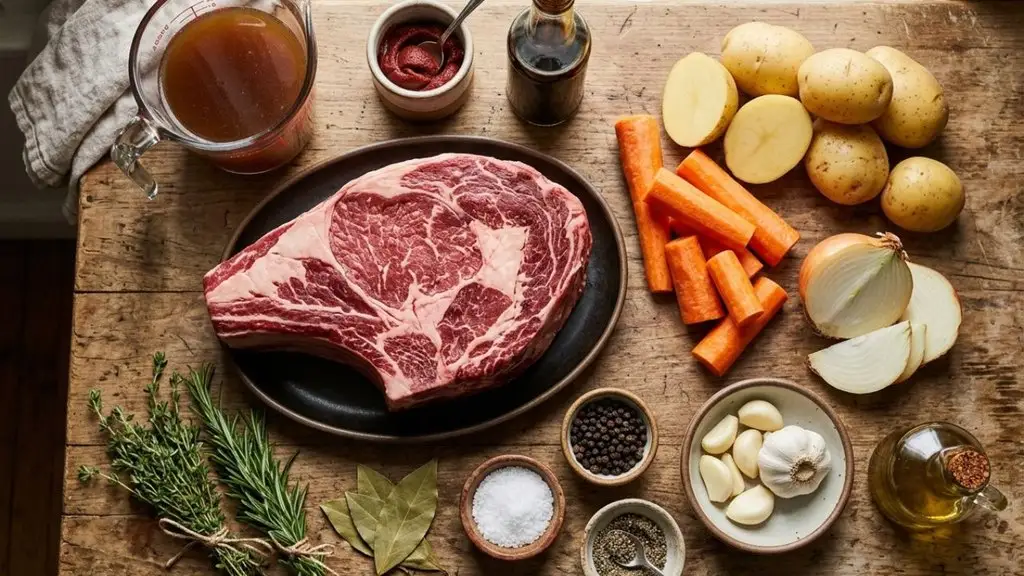
Ingredients You’ll Need
For about 6 servings:
- 3½ to 4 pounds bone-in chuck roast
- 2 tablespoons olive oil or another neutral high-heat oil
- 2 teaspoons kosher salt
- 1½ teaspoons freshly ground black pepper
- 1 large yellow onion, cut into wedges
- 4 garlic cloves, smashed
- 2 cups low-sodium beef broth
- 1 tablespoon Worcestershire sauce
- 1 tablespoon tomato paste
- 1 teaspoon dried thyme
- 1 teaspoon dried rosemary
- 2 bay leaves
- 4 medium carrots, cut into large pieces
- 1½ pounds baby potatoes, halved
- 2 tablespoons butter, optional, for finishing the gravy
Keep the vegetables in fairly large pieces. Smaller pieces can become overly soft during the long braising time.
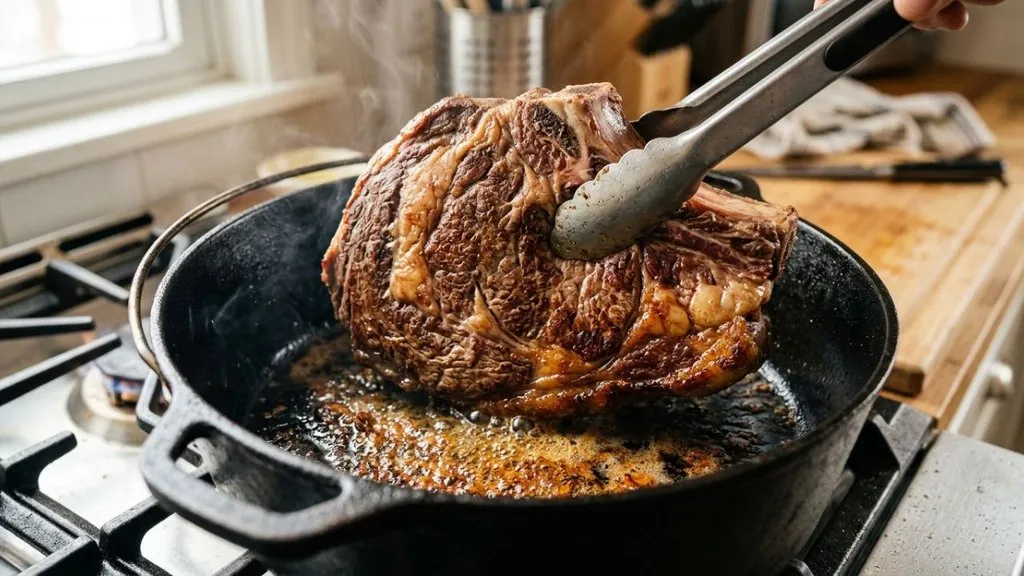
How to Make Bone-In Chuck Roast
1. Season the roast
Use a clean kitchen towel or paper towel to remove any excess moisture from the roast’s surface gently. Season every side generously with salt and black pepper.
Letting the surface dry before searing helps the roast develop better browning.
2. Sear the beef
Heat the oil in a large Dutch oven over medium-high heat. Add the roast and sear it on each major side until deeply browned, usually about 4 to 5 minutes per side.
Don’t rush this step. A good brown crust adds important flavor to the finished gravy.
Transfer the roast to a plate temporarily.
3. Build the braising base
Lower the heat to medium and add onion. Simmer, scraping browned bits from the bottom, until the mixture is cooked, about 3 to 4 minutes.
Add tomato paste and garlic; cook until heated through, about 30 seconds. Add beef broth and Worcestershire sauce, and add thyme, rosemary, and bay leaves.
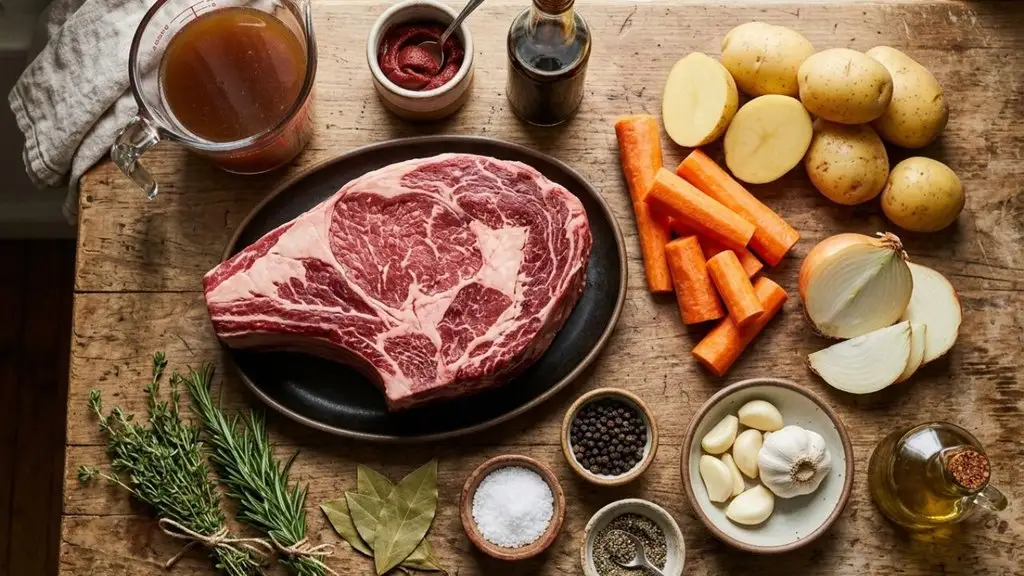
4. Braise the roast
Return the chuck roast to the Dutch oven. The liquid should come partway up the sides of the meat rather than completely cover it.
Cover the pot tightly and place it in a 325°F oven.
Cook for approximately 3½ to 4½ hours, depending on the roast’s size and shape. Start checking after about 3½ hours.
The goal is not simply to reach a particular clock time. The roast should be extremely tender and easy to pierce with a fork.
5. Add the vegetables
Add the carrots and potatoes during approximately the final 60 to 90 minutes of cooking.
This keeps them from spending the entire cooking time in the oven and becoming completely mushy.
Continue cooking until both the beef and vegetables are tender.
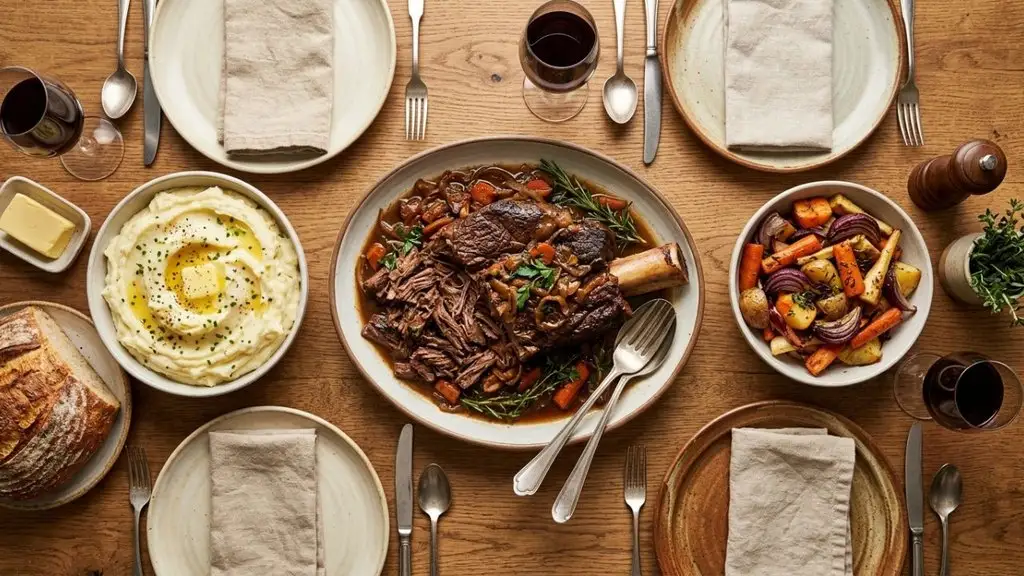
6. Rest and make the gravy
Transfer the roast and vegetables to a serving platter and loosely cover the beef with foil.
Remove the bay leaves from the cooking liquid. If desired, skim excess fat from the surface, then simmer the liquid on the stovetop until slightly concentrated.
For a richer finish, whisk in a little butter.
Slice or gently pull apart the roast and spoon the gravy over the top.
What Is the Best Way to Cook a Bone-In Chuck Roast?
The best method for a tender bone-in chuck roast is slow braising in a covered Dutch oven or similar heavy pot. Searing first creates a browned exterior, while the covered, moist environment gives the connective tissue enough time to soften.
Oven braising at around 325°F is especially convenient because it maintains steady heat while the roast cooks slowly.
A slow cooker is another good option, particularly if you want a hands-off dinner. Wanda Farms, for example, uses a seared bone-in chuck roast with broth and seasonings and cooks it on low for 6–7 hours.
Expert Tips for Tender Chuck Roast
Sear before braising. Don’t skip the browning step. It develops the savory base for the cooking liquid.
Keep the pot covered. A tight lid helps maintain a moist cooking environment.
Don’t drown the roast. The braising liquid should come partway up the meat rather than completely submerge it.
Give it enough time. Chuck roast can remain tough if removed too early. If a fork meets resistance, continue cooking.
Cut vegetables generously. Large carrot and potato pieces hold their shape better during extended cooking.
Rest before serving. Give the roast about 15 minutes to settle before slicing or pulling it apart.
The basic approach is consistent with several of the supplied competitors: Idaho CattleWomen uses a Dutch oven, broth, onions and vegetables at 300°F, while ETX Beef browns the roast before simmering it with broth and vegetables. For more guidance on braising times and suitable beef cuts, check this chuck roast braising guide from Beef. It’s What’s For Dinner.
Common Mistakes to Avoid
Cooking it too quickly
Chuck is not a cut that rewards rushing. If the meat is still chewy, it generally needs more cooking time, not less.
Skipping the sear
You can technically cook the roast without browning it, but the finished dish will miss much of the deep flavor created during searing.
Adding vegetables too early
Potatoes and carrots can become very soft if cooked for the entire braising period. Adding them later gives you a better texture.
Checking only the clock
Every roast is different. Thickness, weight, bone structure, oven temperature, and the pot itself can affect cooking time. Use tenderness as your primary texture test.
For food safety, the USDA recommends that whole beef roasts reach at least 145°F, with a 3-minute rest, when measured with a food thermometer—a chuck roast cooked until fall-apart tender will typically be taken much further for texture.
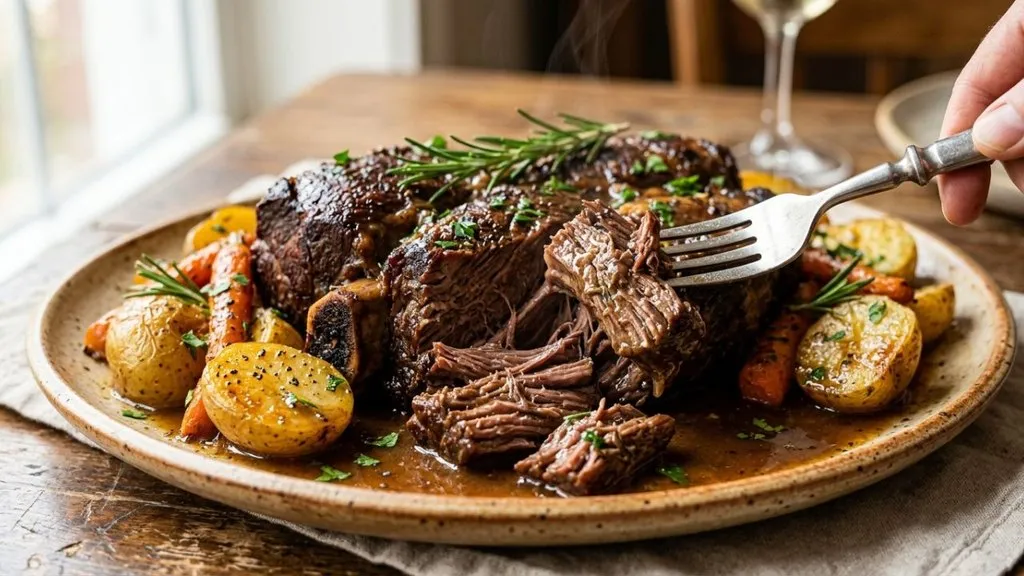
What Can You Make With a Bone-In Chuck Roast?
Bone-in chuck roast is especially good for classic pot roast, shredded beef, sandwiches, tacos, beef bowls, and hearty leftovers.
For a traditional dinner, serve it with mashed potatoes, roasted vegetables, or the potatoes and carrots cooked alongside the roast. The leftover beef can also be shredded and reheated with some of the reserved gravy. If you enjoy hearty potato-based dinners, try our Cheesy Ranch Potatoes and Sausage for another easy comfort-food meal.
If you prefer a different flavor profile, change the herbs and aromatics while keeping the same basic braising method.
Frequently Asked Questions
Can I make this recipe in a slow cooker?
Yes. After searing the roast, transfer it to a slow cooker with the broth and seasonings. Cook on low until the beef is fork-tender, which usually takes several hours, depending on the roast’s size.
Can I use boneless chuck roast?
Yes. Boneless chuck works well with the same braising technique. Begin checking it for tenderness, as its shape and cooking time may differ from those of a bone-in roast.
Why is my chuck roast still tough?
If the roast is tough but has been cooking in a moist environment, it may simply need more time. Continue cooking until a fork or a thermometer probe can easily enter the meat.
Can I make the gravy thicker?
Yes. Strain and reduce the cooking liquid, or thicken it with a small cornstarch slurry. Add the slurry gradually so the gravy doesn’t become too thick.
How should I store leftovers?
Refrigerate leftover beef and gravy promptly in covered containers. For the best texture, reheat the beef gently with some of its cooking liquid so it doesn’t dry out.
Conclusion
The chuck roast recipe is a bone-in version that is tender, flavourful, has a rich gravy and a satisfying amount of vegetables. The secret is to sear the roast thoroughly, cook it slowly enough to allow it to cook up thoroughly without overcooking, and then make sure it has plenty of time to become a fork tender roast.
Serve with the carrots, potatoes and gravy for a warm family dinner. After you try this slow-braised recipe, bone-in chuck roast can become a go-to option for cozy fall dinners or special occasions.
Pingback: The One Chicken Dinner That Makes Everyone Feel Loved - Cravesprout.com