Quick Answer
What Is the Best Recipe for Pepper Steak?
A good pepper steak recipe combines thinly sliced beef, peppers, onions, aromatics, and a balanced soy-based sauce. The best method is to sear the beef separately before combining it with the vegetables and sauce.
How Do You Cook Pepper Steak with Onions?
Sear thinly sliced steak in a hot skillet, remove it, then cook the onions and peppers until crisp-tender. Return the beef to the pan and add a cornstarch-thickened sauce, cooking briefly until everything is coated.
What Cut of Steak Is Best for Pepper Steak?
Flank and skirt steak are excellent choices because they can be sliced thinly against the grain and cooked quickly. Sirloin is another practical option when you want a readily available cut with a tender texture.
Introduction
Pepper steak with onions and peppers is a fast, satisfying skillet dinner made with thinly sliced beef, colorful bell peppers, onions, and a glossy savory sauce. The key is to sear the beef quickly, cook the vegetables until crisp-tender, and combine everything only at the end.
This approach keeps the steak tender while giving the peppers and onions enough color and texture. Serve it over steamed white or jasmine rice for a simple complete meal.
What Makes Good Pepper Steak?
The key to a good pepper steak is to slice the beef thin, cook it in a very hot pan, and cook it for short periods. Slicing against the grain will shorten the muscle fibers, and quick searing will help to get browned edges without spending too much time in the pan.
Thin slices of beef, a very hot pan and short cooking times are the key to good pepper steak. Cutting against the grain shortens the muscle fibers, and quick searing will help the meat brown at the edges without spending too long in the pan.
Flank steak and skirt steak are particularly well suited to this preparation, although sirloin also works well. Several established recipes use one of these cuts and recommend briefly freezing the steak before slicing.
The vegetables should remain slightly crisp rather than completely soft.
A combination of green and red bell peppers gives the dish contrasting color and a balance of fresh, sweet pepper flavor.
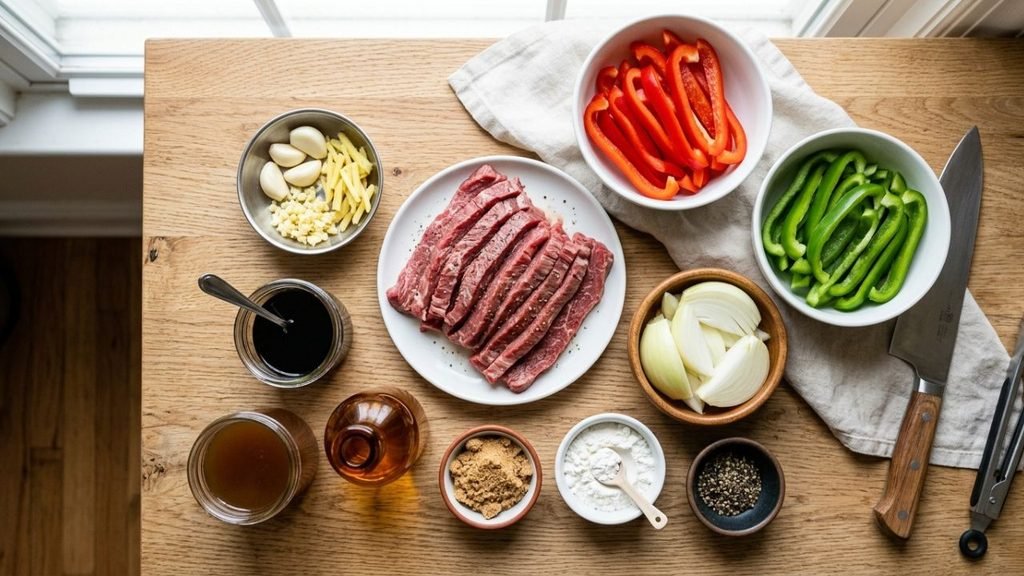
Ingredients You’ll Need
For about 4 servings:
- 1½ pounds flank or sirloin steak, thinly sliced against the grain
- 1 tablespoon neutral cooking oil, plus more as needed
- 1 green bell pepper, sliced
- 1 red bell pepper, sliced
- 1 medium yellow onion, sliced
- 3 cloves garlic, minced
- 1 teaspoon fresh ginger, minced
- ¼ cup low-sodium soy sauce
- ½ cup beef broth
- 1 tablespoon brown sugar
- 1 tablespoon cornstarch
- ¼ teaspoon black pepper
- Cooked white or jasmine rice, for serving
The sauce combines salty soy sauce, beef broth, a little sweetness, and cornstarch for body. Garlic and ginger add aromatic depth without requiring a long marinade. Similar sauce structures are common across modern pepper-steak recipes.

How to Make Pepper Steak with Onions and Peppers
1. Slice and season the steak
For easier slicing, place the steak in the freezer for about 20–30 minutes until it becomes firm but not frozen solid. Cut it thinly across the grain, then season lightly with black pepper.
Look closely at the direction of the visible muscle fibers and cut perpendicular to them. This small preparation step makes a noticeable difference in the final texture.
2. Mix the sauce
Whisk together the soy sauce, beef broth, brown sugar, and cornstarch until smooth. Set it aside while you cook.
Always whisk the sauce again immediately before adding it to the pan because cornstarch settles quickly.
3. Sear the beef
Heat a large skillet over medium-high to high heat until the oil is shimmering. Add the steak in a single layer, working in batches if necessary.
Sear for roughly 1–2 minutes per side, just until browned. Transfer it to a plate. Avoid cooking all the beef in an overcrowded skillet; too much meat releases moisture and encourages steaming instead of browning.
4. Cook the peppers and onions
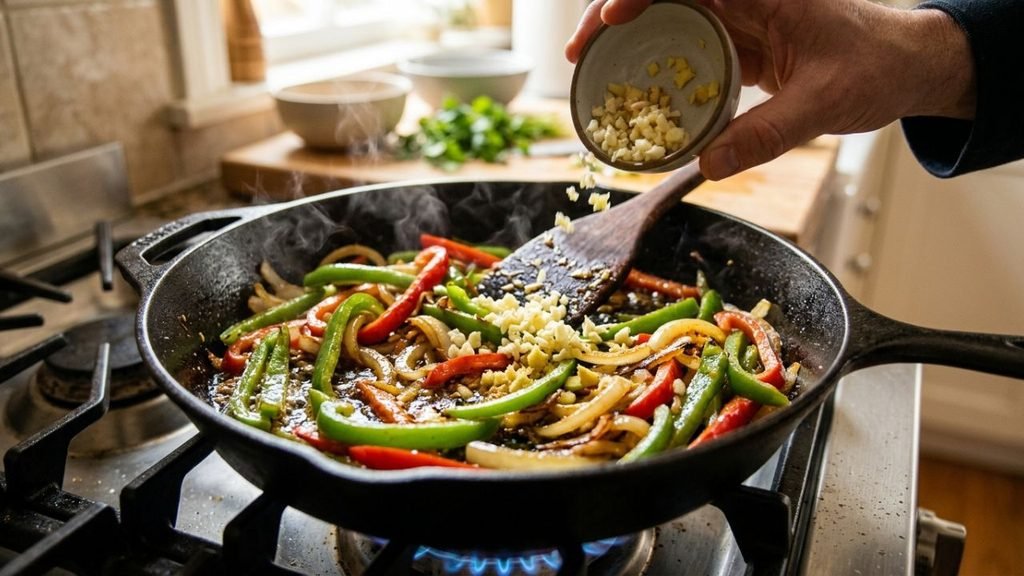
Add a little more oil if the skillet is dry. Add the onion and bell peppers and stir-fry for about 4–6 minutes, until lightly browned and crisp-tender.
The vegetables should bend slightly when bitten but still have some structure. Add the garlic and ginger during the final minute so they become fragrant without burning.
5. Finish the sauce
Return the seared beef and any accumulated juices to the skillet. Give the sauce another stir, pour it in, and toss everything together.
Cook for approximately 1–2 minutes, stirring constantly, until the sauce becomes glossy and lightly coats the steak and vegetables. Cornstarch thickens rapidly, so remove the pan from the heat once the consistency looks right. Comparable recipes generally finish the sauce within a few minutes.
Serve immediately over hot rice.
How Do You Keep Pepper Steak Tender?
The most important steps are cutting against the grain, avoiding overcooking, and searing in batches. Thin strips of beef cook quickly, so leaving them in the pan for much longer than necessary can make them chewy.
If your steak repeatedly turns out tough, check the slicing direction first. Even a good cut can seem chewy when cut parallel to its muscle fibers. For particularly thick pieces, briefly chilling the beef before slicing makes it easier to produce consistently thin strips.
What’s the Secret to Perfect Pepper Steak?
The secret is controlling heat and timing: hot pan, thin beef, uncrowded batches, and crisp-tender vegetables. The sauce should be prepared in advance so everything comes together quickly at the end.
How Long Does It Take for Pepper Steak to Get Tender?
Thinly sliced pepper steak does not need a long simmer to become tender. With the flank, skirt, or sirloin cut correctly, the beef can be seared in just a few minutes and then briefly warmed with the sauce.
Longer cooking can be appropriate for tougher cuts prepared as a braise, but that is a different style of pepper steak. Some traditional recipes use extended simmering, while modern stir-fry versions rely on thin slicing and quick cooking.
Common Mistakes to Avoid
Overcrowding the skillet: Cook the steak in batches when necessary. This preserves high heat and encourages browning.
Cutting with the grain: This produces longer muscle fibers and a chewier bite.
Overcooking the vegetables: Peppers should retain some bite rather than becoming limp.
Adding cold, unstirred sauce: Cornstarch can settle at the bottom of the bowl. Whisk immediately before pouring.
Making the sauce too thick: If it becomes overly sticky, loosen it with a small splash of beef broth or water.
Variations and Serving Ideas
For a richer sauce, replace part of the soy sauce with oyster sauce. For more heat, add red pepper flakes or a sliced fresh chile. A mixture of red, green, yellow, or orange bell peppers also works well.
Serve the finished dish with steamed jasmine rice, white rice, brown rice, or noodles. Rice is especially useful because it absorbs the savory sauce. Pepper steak recipes commonly pair the dish with rice, although noodles and other starches can also work.
For leftovers, refrigerate the cooled steak and vegetables in an airtight container for up to 4 days. Reheat gently in a skillet or microwave until hot, adding a small splash of water if the sauce has tightened in the refrigerator. For more guidance on choosing, slicing, and preparing beef for stir-frying, see this helpful guide on how to make tender pepper steak
Frequently Asked Questions
Can I use green peppers only?
Yes. Green bell peppers work perfectly on their own. Adding red, yellow, or orange peppers gives the dish a sweeter flavor and more color.
Can I make pepper steak without cornstarch?
Yes, but the sauce will be thinner. You can reduce it longer in the skillet, although cornstarch provides the characteristic glossy, lightly thickened texture more quickly.
Can I prepare pepper steak ahead of time?
You can slice the steak and vegetables and mix the sauce several hours ahead. For the best texture, cook the stir-fry shortly before serving rather than fully cooking it and reheating it repeatedly.
Is pepper steak spicy?
Traditional pepper steak does not have to be spicy. Black pepper provides seasoning, while optional chiles or red pepper flakes can be added for noticeable heat.
Can I freeze leftover pepper steak?
It can be frozen in an airtight freezer-safe container, although the peppers may soften after thawing. For the best texture, refrigerate leftovers and eat them within about four days.
Conclusion
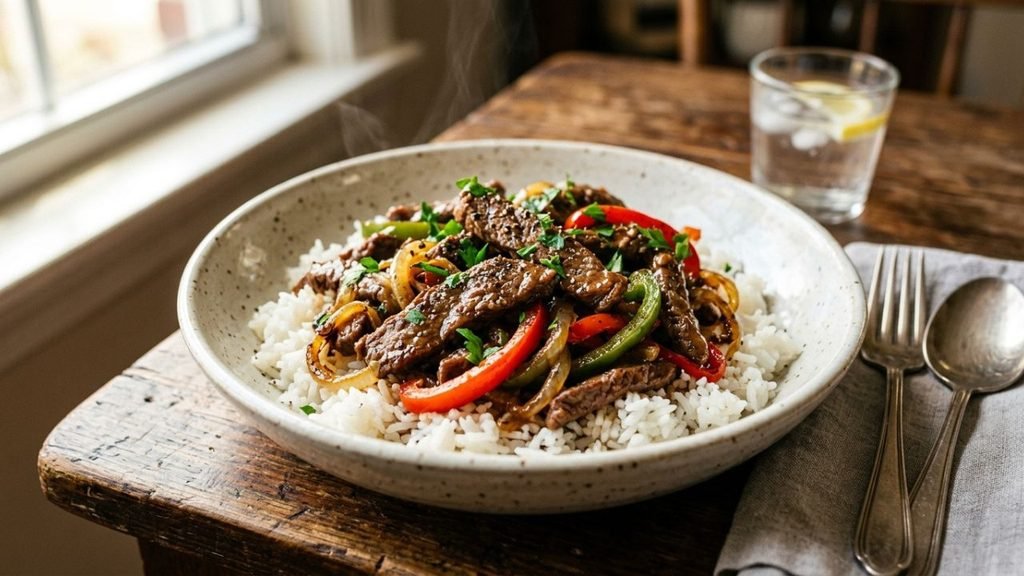
Pepper steak with onions and peppers is an easy skillet dinner that delivers tender beef, crisp-tender vegetables, and a savory sauce without requiring complicated techniques. The most important details are slicing the steak against the grain, keeping the skillet hot, avoiding overcrowding, and adding the sauce only after the beef and vegetables are properly seared.
Serve it over steamed rice for a satisfying weeknight meal, or customize it with your favorite bell peppers and a little extra heat. With these simple techniques, you can make flavorful pepper steak with onions and peppers that is quick, balanced, and easy to prepare at home.