If you are trying to eat more protein, turkey meatballs can be an easy and satisfying choice. But how much protein do you actually get from them?
The turkey meatballs protein content depends on several things, including the type of ground turkey, the size of the meatballs, and the ingredients added to the mixture. As a general guide, a serving of turkey meatballs can provide a useful amount of protein, but the number can vary significantly from one recipe to another.
So, whether you are eating two meatballs with lunch or eight as part of dinner, it is important to look at the actual serving size rather than relying only on the number of meatballs.
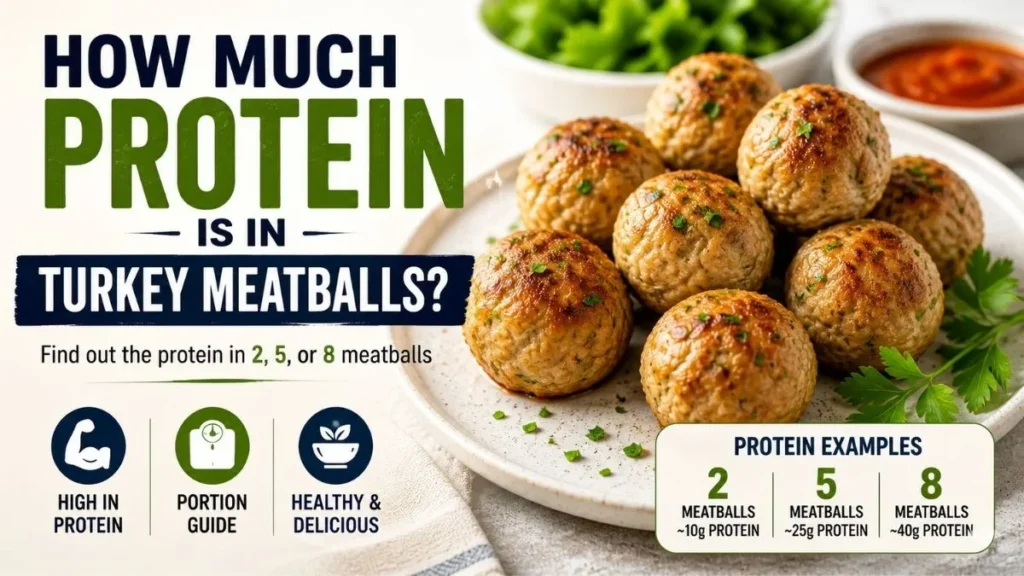
How Much Protein Is in Turkey Meatballs?
Turkey meatballs are a good source of protein because ground turkey is their main ingredient. However, there is no single protein amount that applies to every turkey meatball.
Small homemade meatballs may contain only a few grams of protein each, while larger meatballs made mostly from lean ground turkey can provide considerably more. Ingredients such as eggs, Parmesan cheese, breadcrumbs, oats, or vegetables can also change the nutrition of the finished recipe.
For people tracking protein, the most useful information is the protein per serving or per weight of the finished meatballs.
For example, if a recipe makes 20 meatballs and contains 100 grams of protein in total, each meatball provides about 5 grams of protein. A serving of four would therefore provide approximately 20 grams.
If you enjoy protein-rich lunches, you may also like Creamy Cucumber Rice With Soft Eggs, a refreshing meal made with Greek yogurt, eggs, and rice.
What Determines Turkey Meatballs Protein Content?
The amount of protein in turkey meatballs mainly depends on three factors: the turkey used, the size of each meatball, and the other ingredients in the recipe.
Type of turkey: Lean and extra-lean ground turkey generally provide a higher proportion of protein relative to calories because they contain less fat. Ground turkey with a higher fat content will have a different nutritional profile.
Meatball size: A 2-inch meatball contains more meat than a small 1½-inch meatball, so it will usually contain more protein when the same recipe is used.
Additional ingredients: Eggs and Parmesan can add some protein, while breadcrumbs, oats, vegetables, and sauces contribute varying amounts. If a recipe contains a large amount of filler compared with turkey, the protein per meatball may be lower.
This is why simply counting meatballs is not always enough to determine how much protein you are eating.
Protein in 2, 3, 5, 6, and 8 Turkey Meatballs
There is no standard protein amount for a specific number of turkey meatballs because recipes and serving sizes differ. Still, understanding how to estimate your portion can make tracking easier.
| Number of meatballs | Protein |
| 2 turkey meatballs | Varies by size and recipe |
| 3 turkey meatballs | Often around 10 g in some recipes |
| 5 turkey meatballs | Depends on the individual meatball size |
| 6 turkey meatballs | Depends on the recipe and weight |
| 8 turkey meatballs | Can range considerably between products and recipes |
For example, if one meatball contains 5 grams of protein, two would provide about 10 grams, while five would provide about 25 grams and eight would provide about 40 grams.
But this calculation only works when all the meatballs are the same size and contain the same mixture.
For packaged turkey meatballs, use the nutrition label. It will give you the most accurate protein amount for that particular product.
For homemade meatballs, you can calculate the protein from the entire recipe and divide it by the number of meatballs you make.
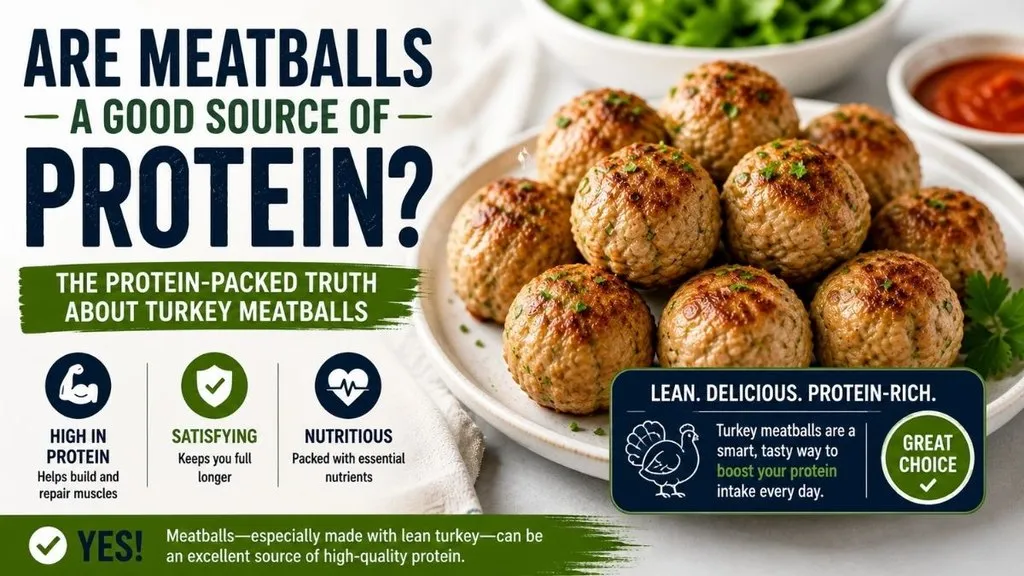
Are Meatballs a Good Source of Protein?
Yes, turkey meatballs can be a good source of protein, especially when they are made with lean ground turkey.
Protein helps make meals more filling and is important for maintaining and repairing body tissues. Turkey also makes it relatively easy to build a protein-focused meal without relying on large portions.
However, not every turkey meatball is automatically high in protein. Some recipes contain significant amounts of breadcrumbs, cheese, oils, or other ingredients. The overall nutrition depends on the complete recipe.
If protein is your main goal, look for recipes where lean turkey makes up most of the mixture and check the protein per serving.
How Much Protein Is in a 2-Inch Meatball?
A 2-inch turkey meatball does not have a fixed amount of protein because diameter alone does not tell you its exact weight.
A 2-inch meatball made from mostly lean turkey will generally contain more protein than a smaller meatball made from the same mixture. However, two meatballs of the same diameter can still have different protein amounts if one recipe contains more breadcrumbs, cheese, or other ingredients.
For accurate tracking, weighing the cooked meatball is a better method than estimating based on diameter.
If you are making meatballs at home, try to make them as evenly sized as possible. This makes cooking easier and keeps your portions more consistent.
How Much Protein Are 3 Turkey Meatballs?
Three turkey meatballs can provide around 10 grams of protein in some recipes, but the actual amount can be lower or higher depending on their size and ingredients.
For example, three small meatballs may contain considerably less protein than three large meatballs made with lean ground turkey.
If you are following a specific protein target, check the recipe’s nutrition information or calculate the protein based on the total recipe. This gives you a much better estimate than simply counting three meatballs.
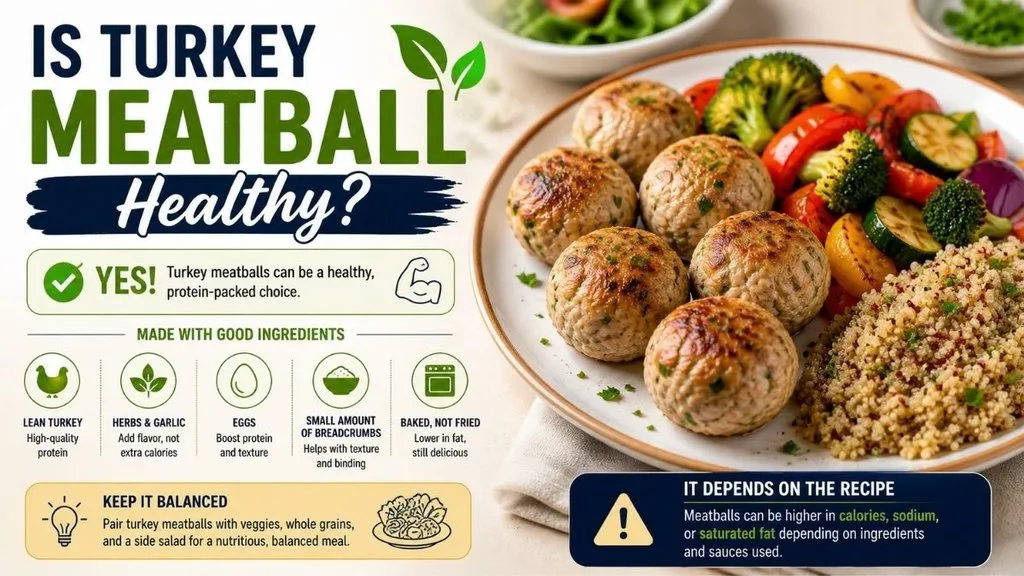
Is Turkey Meatball Healthy?
Turkey meatballs can be a healthy addition to a balanced diet. They provide protein and can be prepared with simple ingredients such as lean turkey, herbs, garlic, onion, eggs, and a small amount of breadcrumbs.
Baking is also a convenient way to cook them without needing a large amount of oil.
That said, the word “healthy” depends on the recipe and the rest of the meal. Meatballs can become higher in calories, saturated fat, or sodium depending on the ingredients and sauces used.
A balanced plate might include turkey meatballs with roasted vegetables, a salad, whole grains, or another nutritious side.
How to Make Higher-Protein Turkey Meatballs
If you want to increase the protein in homemade turkey meatballs, start with lean ground turkey and keep lower-protein fillers to a reasonable amount.
A basic mixture can include:
- Lean ground turkey
- Egg
- A small amount of breadcrumbs or oats
- Garlic
- Onion
- Italian herbs or other seasonings
- Optional Parmesan cheese
Combine the ingredients gently until they are just mixed. Avoid squeezing and kneading the meat excessively because overworking the mixture can make the meatballs dense.
Shape them into evenly sized balls and place them on a lined baking sheet.
Bake until the centers reach 165°F (74°C). A food thermometer is the safest way to check doneness because cooking time can vary depending on the size of the meatballs and your oven.
Lean turkey can become dry when overcooked, so avoid leaving the meatballs in the oven longer than necessary.
Tips for Juicy Turkey Meatballs
Higher protein does not mean your meatballs have to be dry. A few simple techniques can help keep them tender.
First, avoid overmixing the ground turkey. Mix the ingredients just enough to distribute everything evenly.
Second, don’t make the meatballs dramatically different in size. Small pieces may overcook while larger ones are still finishing in the center.
A small amount of egg or another moist ingredient can also help create a softer texture. Finely chopped onion adds moisture and flavor without dramatically changing the protein content.
Finally, use a thermometer instead of cutting into every meatball to check whether it is done. Once the center reaches 165°F, remove the meatballs from the oven.
How to Build a High-Protein Turkey Meatball Dinner
Turkey meatballs can be the protein centerpiece of a complete meal. The easiest approach is to combine them with vegetables and a filling carbohydrate or another protein-rich food.
For example, serve them with roasted broccoli and potatoes, whole-grain pasta with tomato sauce, or a grain bowl with vegetables.
You can also add a Greek-yogurt-based sauce for extra creaminess and some additional protein.
If you are preparing meals in advance, divide the cooked meatballs into individual portions. This makes it easier to keep track of how many you are eating and simplifies weekday meals. When reheating, heat the meatballs until they are hot throughout. For more guidance, follow these safe food handling recommendations from the FDA.
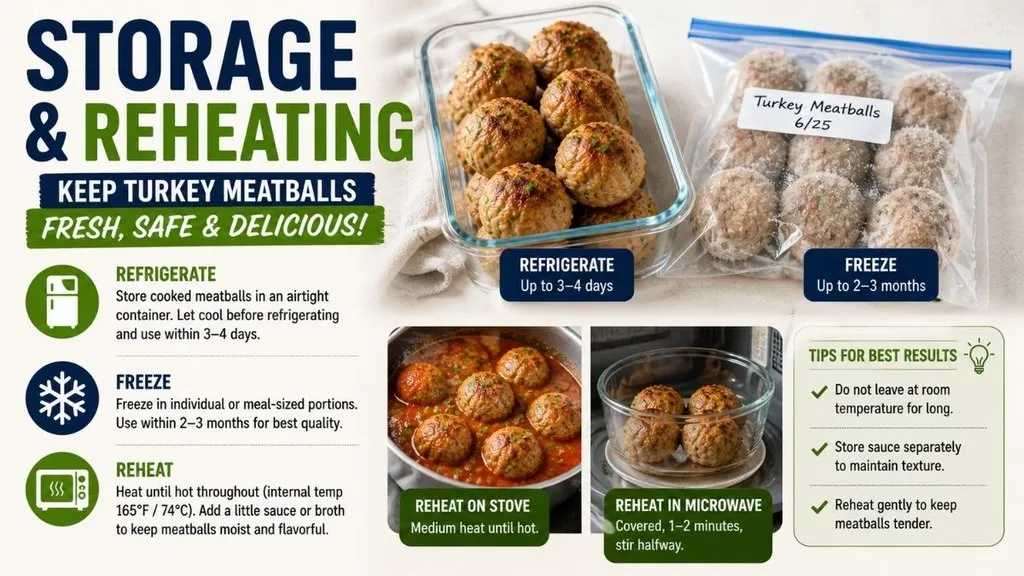
Storage and Reheating
Cooked turkey meatballs can be refrigerated in an airtight container and reheated when needed. Let them cool appropriately before storing them, and keep them refrigerated rather than leaving them at room temperature for extended periods.
For longer storage, turkey meatballs can be frozen. Freezing them in individual or meal-sized portions makes them easier to use later.
When reheating, heat the meatballs until they are hot throughout. Adding a little sauce before reheating can help prevent lean meatballs from becoming dry.
FAQ’s
How much protein is in one turkey meatball?
The amount varies according to the size and recipe. A small homemade meatball may contain only a few grams of protein, while a larger meatball made mostly from lean turkey can contain considerably more.
Does lean ground turkey have more protein?
Lean ground turkey generally provides a higher proportion of protein relative to calories because it contains less fat. The exact protein amount still depends on the specific ground turkey used.
Can turkey meatballs help with a high-protein diet?
Yes. Turkey meatballs can be an easy way to add protein to lunch or dinner. Pairing them with other nutritious, protein-containing foods can make the entire meal more substantial.
Are baked turkey meatballs healthier than fried ones?
Baking can reduce the need for added cooking oil, which may lower the overall calorie and fat content of the meal. However, the healthfulness of the finished meatballs still depends on the ingredients and portion size.
Can turkey meatballs be frozen?
Yes, cooked turkey meatballs can be frozen for convenient future meals. Store them in airtight, freezer-safe containers or bags and reheat them thoroughly when ready to eat.
The Bottom Line
The turkey meatballs can vary quite a bit, so there is no universal amount of protein in two, five, six, or eight meatballs.
The most important factors are the type of turkey, the size of each meatball, and the ingredients used in the recipe. For the most accurate number, use the nutrition information for your specific recipe or package.
If you’re making them at home, calculate the total protein in the recipe and divide it by the number of meatballs produced. That simple method gives you a much better idea of how much protein you’re getting in each serving.
Pingback: Easy Peanut Butter Protein Balls You’ll Want to Make on Repeat