If you’re searching for the Wes Canfield smoked salmon recipe, you’re probably looking for more than just another way to smoke salmon. This recipe has a bit of history behind it. Wes Canfield won Fish Alaska magazine’s 2011 smoked salmon contest, making his method one of the more memorable Alaska-style smoked salmon recipes.
What I like about this recipe is that it doesn’t use many uncommon or complicated ingredients. The flavor comes from brown sugar, salt, spices, yoshida sauce, and plenty of time in the smoker. The salmon is sweet, savory, smoky, and rich, but still retains the natural taste of the fish.
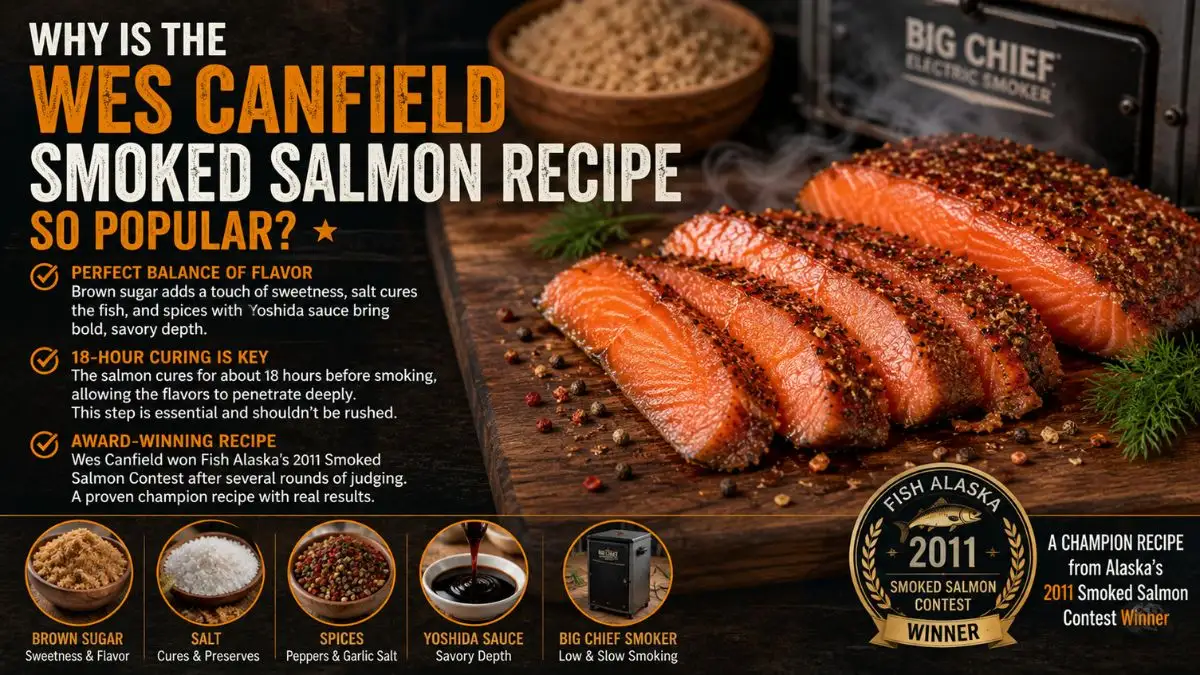
Why Is the Wes Canfield Smoked Salmon Recipe So Popular?
This recipe appeals because of its balance of sweet, salty, spicy, and smoky flavors. Brown sugar gives the salmon a slightly sweet coating, while salt helps cure the fish. Black pepper, red pepper flakes, garlic salt, and Yoshida sauce add extra depth.
The original recipe is for a Big Chief Electric Smoker and suggests curing the salmon for about 18 hours before smoking. This extra curing time is key to the recipe and shouldn’t be rushed.
Canfield’s recipe also has something many internet recipes don’t: a real competition history. He won Fish Alaska’s 2011 smoked salmon contest after making it through several rounds of judging.
Ingredients You’ll Need
For an average red or coho salmon, the original recipe uses:
- 2 cups brown sugar
- 1/2 cup salt
- 1/16 cup red pepper flakes
- 1/16 cup black pepper
- 1/16 cup garlic salt
- 1/2 cup Yoshida sauce
- Salmon, cut into pieces about 1 inch by 2 inches, with the skin left on
The amounts are based on an average salmon rather than a specific weight, so you may need to adjust the recipe if you’re smoking a much smaller or larger fish.
If you don’t have Yoshida sauce, you can experiment with another sweet-savory teriyaki-style sauce, although the flavor won’t be the same as the original.
How to Prepare the Salmon
Start by cutting your salmon into pieces roughly 1 inch by 2 inches. Leave the skin on because it helps keep the pieces together during smoking.
Combine the brown sugar, salt, red pepper flakes, black pepper, and garlic salt in a bowl. Mix everything well.
Place the salmon pieces in a container and cover them with the seasoning mixture. Pour the Yoshida sauce over the fish, making sure the pieces are coated.
Cover the container and refrigerate for about 18 hours. Halfway through the curing process, gently turn or mix the salmon so the seasoning reaches all sides.
After curing, remove the salmon from the mixture. Place the pieces on your smoker racks and use paper towels to remove excess moisture.
Let the salmon sit for about an hour before smoking. The surface should look dry, not wet. Looking for more healthy, protein-rich meals? Check out these 12 High Protein Recipes for easy ideas.
How to Smoke Wes Canfield’s Salmon
The original recipe uses a Big Chief electric smoker. Warm the smoker for about an hour before adding the salmon.
The original smoking time is about 4 to 8 hours, although your actual cooking time may vary. Salmon thickness, smoker temperature, outdoor weather, and the type of smoker you’re using can all affect how quickly the fish cooks.
The original method uses wood chips during the first several hours to build the smoke flavor. If you’re using a modern smoker, alder is an excellent choice for salmon because it has a mild, pleasant smoke flavor. Apple wood is another good option.
Don’t worry if your smoker cooks differently from the original equipment. The important thing is to cook the salmon slowly and keep an eye on its internal temperature.
For food safety, fish should reach 145°F (63°C) in the thickest part. A food thermometer is much more reliable than judging doneness by time alone.
What Is the Best Smoked Salmon in the World?
No one smoked salmon is the best for everyone. Different people prefer different levels of sweetness, saltiness, smoke, and spice.
Still, the Wes Canfield recipe has a strong claim to the title of an award-winning smoked salmon recipe because Canfield actually won Fish Alaska’s 2011 smoked salmon competition.
That’s what makes this recipe especially interesting. It’s not simply a recipe labeled “award-winning” to make it sound impressive. It comes from a real smoked salmon contest and an experienced Alaska fisherman.
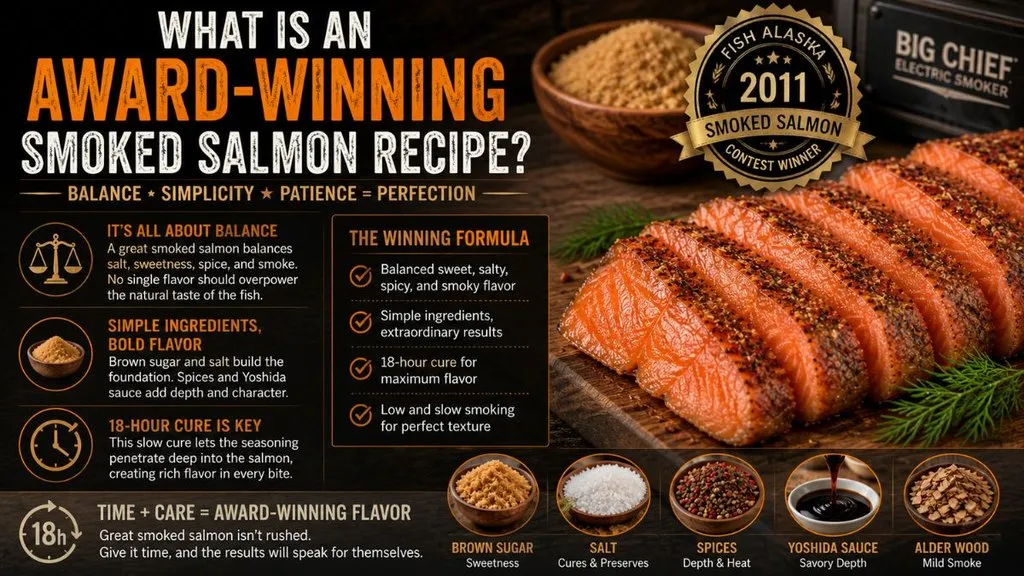
What Is an Award-Winning Smoked Salmon Recipe?
A great smoked salmon recipe is really about balance. You want enough salt to season the fish, enough sweetness to round out the flavor, and enough smoke to add character without overpowering the salmon.
The Wes Canfield method keeps things fairly simple. The brown sugar and salt form the foundation, while the spices and Yoshida sauce bring additional flavor.
The 18-hour cure is another important detail. It gives the seasoning time to work into the salmon before it goes into the smoker.
If you want better smoked salmon, don’t rush this part of the process.
What Is the Best Way to Prepare Smoked Salmon?
For this recipe, the best approach is to cure the salmon, dry the surface, and smoke it slowly.
The drying stage is easy to overlook, but it matters. After curing, allowing the salmon to sit uncovered helps remove surface moisture and prepares the outside for smoking.
Avoid using too much smoke. Salmon has a naturally rich flavor, and heavy smoke can easily overpower it.
If you’re using a modern smoker, focus less on copying the original cooking time and more on controlling the temperature and checking the fish as it cooks.
How Long Should You Smoke Salmon?
The original Wes Canfield method calls for approximately 4 to 8 hours of smoking.
That’s a useful starting point, but don’t treat it as an exact rule. A thick piece of salmon may take considerably longer than a thin piece, and different smokers can operate at very different temperatures.
The safest approach is to use a thermometer and check the thickest piece. Once the salmon reaches 145°F, it has reached the recommended safe temperature for cooked fish.
The finished salmon should be firm and cooked through while still retaining some moisture. If it becomes hard, dry, or overly dark, it has probably spent too long in the heat.
Is Smoked Salmon Actually Healthy?
Salmon is a nutritious fish and is a good source of protein and omega-3 fatty acids.
On the other hand, smoked salmon has a relatively high sodium content, since salt is essential to the curing process. This dish contains a lot of salt, so it’s better to eat it alongside other dishes rather than as a low-sodium meal. Moreover, food safety is also very important. Keep smoked salmon cold and never leave it out at room temperature for long.
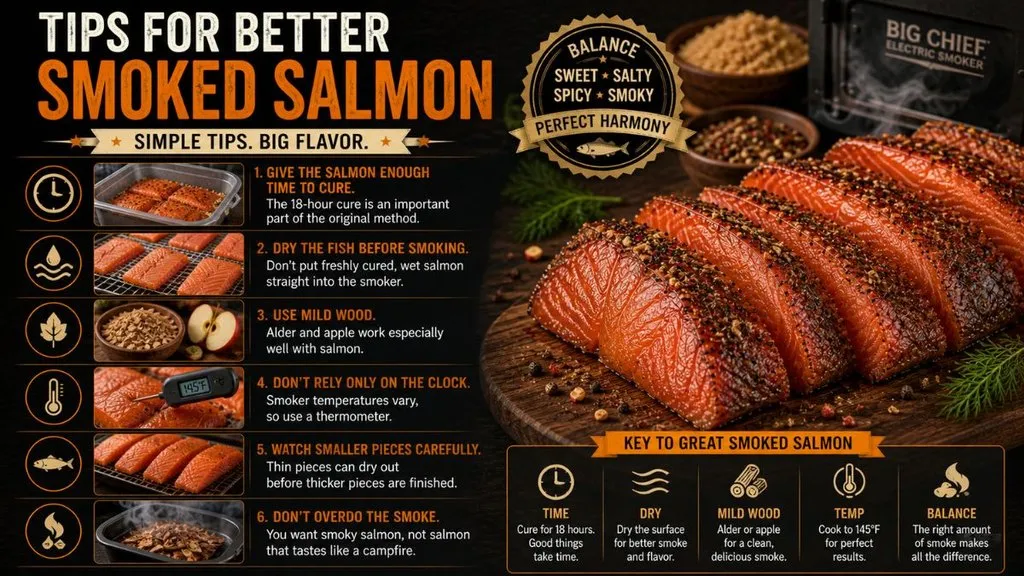
Tips for Better Smoked Salmon
A few simple tips can make a big difference.
- Give the salmon enough time to cure. The 18-hour cure is an important part of the original method.
- Dry the fish before smoking. Don’t put freshly cured, wet salmon straight into the smoker.
- Use mild wood. Alder and apple work especially well with salmon.
- Don’t rely only on the clock. Smoker temperatures vary, so use a thermometer.
- Watch smaller pieces carefully. Thin pieces can dry out before thicker pieces are finished.
- Don’t overdo the smoke. You want smoky salmon, not salmon that tastes like a campfire.
How to Serve Smoked Salmon
Once your salmon is ready, you can enjoy it in plenty of ways.
For a simple appetizer, serve it with crackers, cream cheese, lemon, capers, or fresh dill. It also makes a great topping for toasted bread or bagels.
You can flake leftover salmon into scrambled eggs, salads, pasta, sandwiches, or breakfast bowls. It adds plenty of flavor without requiring much extra preparation.
Store leftover smoked salmon in a covered container in the refrigerator and handle it like other cooked seafood. If you won’t be eating it soon, freezing is another option.
One of the best things about Wes Canfield smoked salmon is that it’s very simple to prepare and doesn’t require any special ingredients or techniques. The key is good salmon, a well-balanced cure, proper drying, and patient smoking.
If you’re willing to give the fish time to cure and smoke properly, you’ll have a flavorful Alaska-style smoked salmon that’s worth sharing with family and friends. For more seafood safety tips, check the FDA’s seafood safety guide.
Frequently Asked Questions
Can I use king salmon?
Yes. This method works with different types of salmon, including king, red, and sockeye. Thicker pieces may need additional smoking time.
Can I use a pellet smoker?
Yes. You can adapt the recipe to a pellet smoker or another modern smoker. Just remember that cooking times may be different from the original Big Chief method.
Can I make it less spicy?
Absolutely. Reduce the red pepper flakes for a milder flavor, or leave them out if you don’t want any noticeable heat.
Why is my smoked salmon too salty?
The most likely reason is that the fish was too small for the amount of curing mixture used, or it was cured for too long. Adjust the amount of the mixture according to the quantity of salmon you’re preparing.
What wood is best for salmon?
Alder is a classic choice for salmon because it produces a mild smoke. Apple wood is also a good option if you prefer a slightly sweeter smoke flavor.
Conclusion
This Wes Canfield smoked salmon recipe is easy, delicious, and makes it worth the wait. Gently smoked salmon in a sweet-savory cure, with plenty of time, is a delicious, easy-to-make home smoked salmon. Take your time and enjoy an authentic Alaska favorite by following the steps.
Pingback: Sweet Chilli Chicken Recipe – Crispy, Sticky and Easy