Creamy pasta already has plenty going for it: rich sauce, melted cheese and a smooth texture that makes every bite comforting. But if your sauce tastes a little too heavy or needs more contrast, there’s a surprisingly simple ingredient to try: balsamic glaze.
A small drizzle can add a sweet, tangy note that cuts through the richness of a cream-based pasta sauce and gives the whole dish a more interesting flavor.
Why Add Balsamic Glaze to Creamy Pasta?
Cream-based sauces are naturally rich. Ingredients such as heavy cream, butter and Parmesan bring plenty of fat and savory flavor, but they can sometimes make a pasta dish feel a little flat.
That’s where acidity and sweetness can help.
Balsamic glaze has a thick, syrupy texture and a concentrated sweet-tart flavor. Instead of changing the sauce completely, a little glaze can add another layer of flavor.
Think of it as a finishing touch rather than a main ingredient.
You don’t need much to notice the difference.
Start With a Small Amount
When trying balsamic glaze in a creamy sauce for the first time, resist the temptation to pour it in heavily.
Start with about 1 teaspoon, stir it through the sauce and taste. If you want more of that sweet and tangy flavor, add a little more.
This is especially important with creamy pasta because the balsamic should complement the sauce rather than dominate it.
A heavy pour could make the pasta noticeably sweet and acidic, while a small amount can provide just enough contrast.
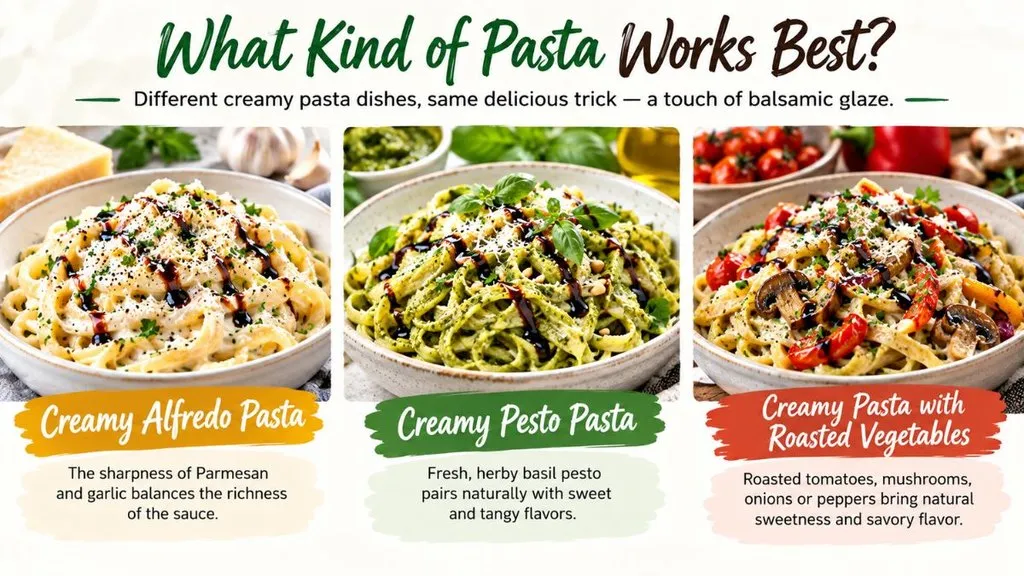
What Kind of Pasta Works Best?
There isn’t just one pasta dish that can benefit from this trick.
Try it with a creamy Alfredo-style pasta, especially one made with Parmesan and garlic. The sharpness of the cheese and the richness of the sauce give the balsamic glaze something to balance.
It can also be interesting with creamy pesto pasta. The fresh, herby flavor of basil pesto pairs naturally with sweet and tangy flavors.
Another option is a creamy pasta with roasted vegetables. Roasted tomatoes, mushrooms, onions or peppers can bring their own sweetness and savory flavor, making the balsamic glaze feel like a natural addition rather than an unexpected one.
Try It With Sun-Dried Tomatoes
If you already enjoy sun-dried tomato pasta, balsamic glaze is worth experimenting with.
Sun-dried tomatoes have a concentrated tomato flavor with a natural sweetness, while balsamic glaze adds another sweet-tart element. Combined with a creamy sauce, the result can have several different flavors working together instead of one rich note dominating the dish.
You can also add garlic, spinach, basil or Parmesan depending on the type of pasta you’re making.
The important thing is not to add everything at once. Let a few ingredients do the work.
Don’t Confuse Balsamic Glaze With Balsamic Vinegar
If you have a bottle of balsamic vinegar in your kitchen, you might wonder whether you can simply use that instead.
They aren’t exactly the same.
Balsamic vinegar is thinner and more acidic, while balsamic glaze is thicker and usually has a sweeter, more concentrated flavor. That makes the glaze particularly convenient when you’re looking for a finishing drizzle.
If you’re experimenting with regular balsamic vinegar instead, use it carefully because its sharper acidity can change the balance of a creamy sauce more quickly.

A Little Goes a Long Way
The best part of this pasta trick is that you don’t need to rebuild your favorite recipe.
Make your creamy pasta the way you normally do. Once the sauce is finished, taste it first. If it feels overly rich or seems to be missing a little brightness, try a small amount of balsamic glaze.
You can mix it into the sauce or drizzle a little over the finished pasta.
Then taste again.
That small adjustment may be all the dish needs.
The Bottom Line
Creamy pasta doesn’t always need more cheese, cream or butter to become more flavorful. Sometimes the better move is to introduce a contrasting flavor.
Balsamic glaze can add a sweet and tangy finish to a rich cream-based pasta sauce, giving the dish more balance without requiring a complicated recipe.
Start with a small amount, taste as you go and adjust it to your preference. If you already have balsamic glaze in your pantry, your next creamy pasta could be a good excuse to experiment with it.