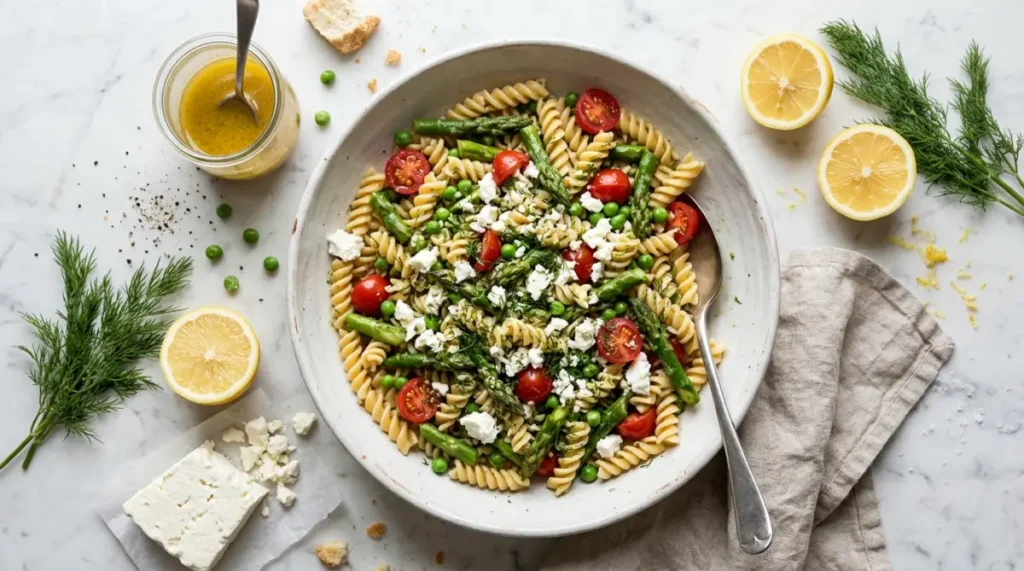
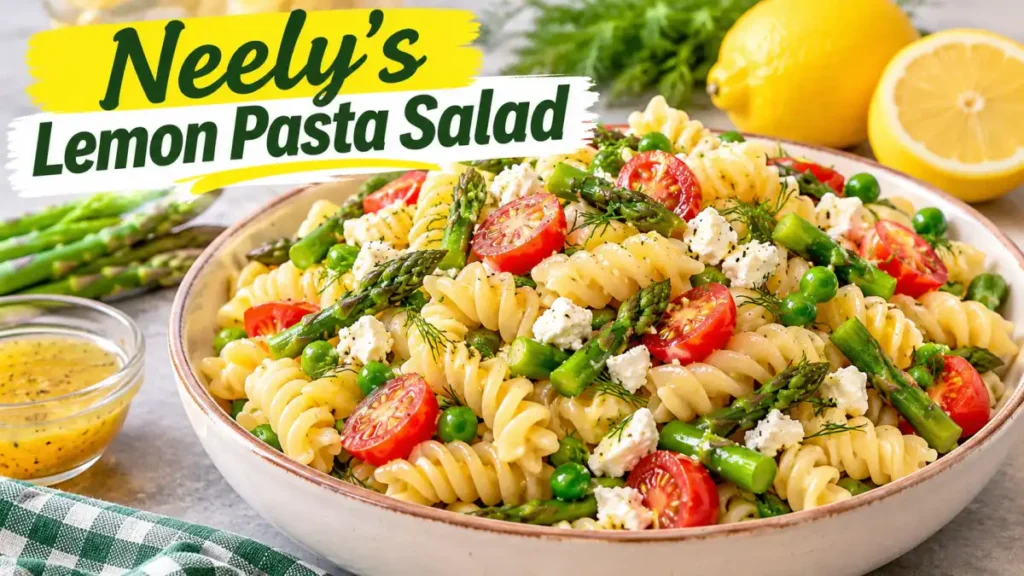
Neely’s lemon pasta salad recipe is a refreshing combination of corkscrew pasta, tender asparagus, sweet cherry tomatoes, green peas, fresh dill, and crumbled feta cheese. Everything comes together with a homemade lemon-Dijon dressing made from fresh lemon juice, olive oil, garlic, and mustard.
Originally featured by Patrick and Gina Neely on Food Network, this vegetarian pasta salad takes approximately 30 minutes to prepare and makes 4–6 servings. It’s a lovely choice for summer lunches, family gatherings, picnics, and potluck dinners.
What makes this recipe appealing is its balance of flavors and textures. The lemon provides brightness, the Dijon mustard adds a pleasant tang, the feta contributes a salty richness, and the vegetables bring freshness and color. Looking for another delicious pasta dish? Try this Mafaldine Bolognese recipe for a hearty Italian-inspired meal.
What Makes Neely’s Lemon Pasta Salad Special?
Neely’s lemon pasta salad stands out because it uses a simple homemade dressing instead of a heavy mayonnaise-based sauce. Fresh lemon juice and olive oil create a light coating, while Dijon mustard brings everything together.
The combination of ingredients also makes every serving interesting. Corkscrew pasta holds the dressing, asparagus adds a tender bite, cherry tomatoes provide natural sweetness, and peas contribute a mild, fresh flavor.
Fresh dill gives the salad its distinctive herbal character. Meanwhile, feta cheese adds a creamy, slightly salty element that balances the acidity of the lemon.
Another advantage is its versatility. You can serve it as a side dish with grilled food or enjoy a generous portion as a vegetarian lunch.
Ingredients You’ll Need
The original recipe uses straightforward ingredients that are generally easy to find in grocery stores. Here is the ingredient list for approximately 4–6 servings.
| Ingredient | Amount |
| Corkscrew pasta | 1 pound |
| Fresh asparagus | 1 pound |
| Dijon mustard | 2 tablespoons |
| Garlic, minced | 1 clove |
| Fresh lemon juice | ¼ cup |
| Extra-virgin olive oil | ¼ cup |
| Cherry tomatoes, halved | 1 pint |
| Fresh dill, chopped | ¼ cup |
| Frozen peas, defrosted | 1 cup |
| Crumbled feta cheese | 7 ounces |
| Salt | To taste |
| Freshly ground black pepper | To taste |
These quantities follow the Food Network recipe. For the original ingredient list and cooking instructions, check out lemon pasta salad recipe featured on Food Network.
Understanding the Important Ingredients
Corkscrew pasta: Rotini or fusilli works particularly well because its twisted shape catches the lemon dressing and small pieces of vegetables.
Asparagus: Choose firm, bright-green spears. Trim the woody ends before cooking.
Fresh lemon juice: Freshly squeezed lemon gives the dressing a clean, vibrant citrus flavor. Bottled juice can be used when necessary, but fresh is preferable.
Dijon mustard: This ingredient contributes tanginess and helps emulsify the olive oil and lemon juice into a more cohesive dressing.
Fresh dill: Dill adds an aromatic, slightly grassy flavor. It complements both the lemon and feta.
Feta cheese: Use crumbled feta for convenient mixing. Its salty, creamy character balances the sharper dressing.
How to Make Neely’s Lemon Pasta Salad
The preparation involves four main stages: cooking the pasta, blanching the asparagus, preparing the dressing, and combining everything.
The original recipe takes approximately 30 minutes, including preparation and cooking.
Step 1: Cook the Pasta
Bring a large pot of generously salted water to a boil. Add the corkscrew pasta and cook according to the package instructions until al dente.
The pasta should be tender but retain a slight firmness in the center. Avoid overcooking because soft pasta can become mushy after absorbing the dressing.
Drain the pasta and rinse it under cool water to stop the cooking process. Allow excess water to drain before transferring it to a large mixing bowl.
Step 2: Blanch the Asparagus
Bring another pot of salted water to a boil. Add the asparagus and cook for approximately 3 minutes, until the spears turn bright green and become slightly tender.
Immediately transfer the asparagus into a bowl of ice water. This process, known as shocking, stops further cooking and helps preserve its color and texture.
Drain thoroughly, pat dry, trim the ends, and cut the spears into bite-sized pieces.
Step 3: Prepare the Lemon-Dijon Dressing
In a small bowl, whisk together the Dijon mustard, minced garlic, fresh lemon juice, and extra-virgin olive oil.
Continue whisking until the mixture looks evenly combined. Season with salt and freshly ground black pepper according to your preference.
The finished dressing should taste bright, slightly sharp, and well balanced. If it seems too acidic, a little additional olive oil can soften the flavor.
Step 4: Combine Everything
Add the cooled pasta and asparagus to a large serving bowl.
Add the halved cherry tomatoes, defrosted peas, chopped fresh dill, and crumbled feta cheese.
Pour the prepared lemon-Dijon dressing over the ingredients. Toss gently using large spoons or salad tongs until everything is evenly coated.
Taste the salad and adjust the seasoning with additional salt or black pepper if needed.
Your lemon pasta salad is ready to serve. You can enjoy it immediately or refrigerate it briefly to allow the flavors to come together.
Expert Tips for Better Flavor and Texture
A few simple preparation techniques can make a noticeable difference in the finished salad.
- Don’t overcook the pasta: Al dente pasta holds its shape better and provides a more pleasant texture in cold salads.
- Dry the vegetables properly: Excess water from asparagus or tomatoes can dilute the dressing. Drain and dry ingredients before mixing.
- Use fresh lemon: Freshly squeezed juice gives the dressing a brighter flavor than bottled alternatives.
- Add feta carefully: Fold the cheese into the salad gently to preserve some larger crumbles.
- Taste before serving: Pasta absorbs some dressing as it rests, so the seasoning may need a small adjustment.
- Avoid adding hot ingredients: Allow the pasta and asparagus to cool before combining them with feta and tomatoes.
One particularly useful technique is to prepare a little extra dressing separately. If the salad becomes dry after refrigeration, you can toss it with a small amount before serving. If you’re planning a summer barbecue, pair this refreshing pasta salad with homemade BBQ sauce recipe.
Common Mistakes, Variations and Serving Suggestions
The most common problem with vegetable pasta salads is excess moisture. Wet vegetables can make the dressing watery and prevent it from coating the pasta properly.
Another mistake is overcooking the asparagus. Three minutes is a useful starting point for average-sized spears, but thinner asparagus may need less time.
Adding too much lemon juice without tasting the dressing can also overpower the other ingredients. Keep the balance between acidity, olive oil, mustard, and salt in mind.
Can You Change the Ingredients?
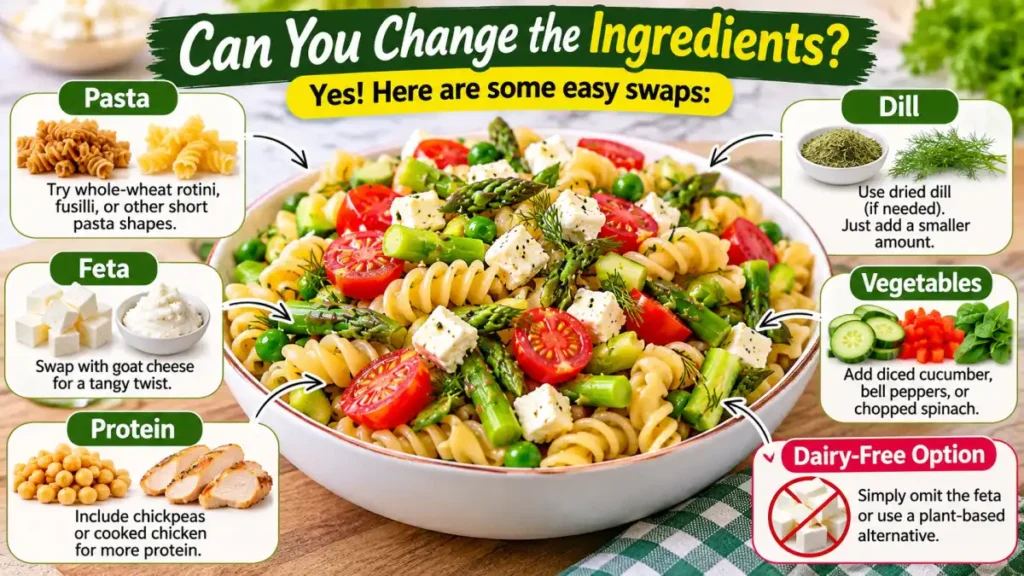
Yes. Several ingredients can be adjusted without losing the general character of the dish.
- Pasta: Whole-wheat rotini, fusilli, or other short pasta shapes are suitable alternatives.
- Dill: Dried dill can be substituted when fresh dill is unavailable. Use a smaller quantity because dried herbs are more concentrated.
- Feta: Goat cheese can provide a similarly tangy alternative, although the flavor and texture will differ.
- Vegetables: Diced cucumber, bell peppers, or chopped spinach can add variety.
- Protein: Chickpeas or cooked chicken can make the salad more substantial.
For a dairy-free version, simply omit the feta or use a suitable plant-based alternative.
What Goes Well with Lemon Pasta Salad?
This salad works especially well alongside grilled chicken, roasted vegetables, grilled fish, and barbecue dishes.
It’s also suitable for summer picnics, outdoor lunches, buffet tables, and family gatherings. Because it contains pasta and several vegetables, it can serve as either a side dish or a light standalone meal.
Frequently Asked Questions
1. Is Neely’s lemon pasta salad vegetarian?
Yes. The original ingredient list contains pasta, vegetables, olive oil, lemon, herbs, mustard, and feta cheese. Check the pasta and cheese labels if you follow a strict vegetarian diet.
2. Can I use bottled lemon juice instead of fresh lemon juice?
Yes, bottled lemon juice works when fresh lemons are unavailable. However, freshly squeezed juice generally provides a brighter citrus flavor.
3. Can I use frozen asparagus?
Fresh asparagus is preferable for its firmer texture, but frozen asparagus can work. Thaw and drain it thoroughly before adding it to the salad.
4. Can I serve this pasta salad warm?
Yes, although it is traditionally served chilled or at room temperature. For a warmer version, combine the ingredients while the pasta is slightly warm and add the feta last.
5. How can I make the dressing less acidic?
Whisk in a little extra olive oil to soften the lemon flavor. Taste gradually rather than adding too much oil at once.
Final Thoughts
Neely’s lemon pasta salad recipe is a practical way to bring fresh vegetables, pasta, herbs, and a bright homemade dressing together in one dish. Its combination of asparagus, cherry tomatoes, peas, feta, and lemon-Dijon dressing makes it suitable for everyday lunches as well as special gatherings.
The key to a successful result is simple: cook the pasta until al dente, keep the asparagus slightly crisp, drain the vegetables thoroughly, and balance the dressing before tossing everything together.
Whether you’re planning a picnic, preparing a potluck side dish, or looking for a refreshing vegetarian meal, this lemon pasta salad is a versatile recipe worth adding to your collection.