Quick Answer
What food is Tyler Florence known for?
Tyler Florence is known for approachable American comfort food, elevated steakhouse cooking, and recipes such as fried chicken, mashed potatoes, mac and cheese, spaghetti and meatballs, and beef stew. His cooking style often combines familiar ingredients with restaurant-inspired techniques.
What are some of Tyler Florence’s best recipes?
Some of Tyler Florence’s best-known recipes include The Ultimate Beef Stew, Velvety Mashed Potatoes, The Ultimate Potato Gratin, Spaghetti and Meatballs, Mac ‘N Cheese with Bacon, French Onion Soup, and Roast Prime Rib of Beef with Horseradish Crust.
What makes Tyler Florence’s beef stew different from traditional beef stew?
The recipe stands out because of its deeply browned beef, aromatic herbs, garlic, orange zest, and a small amount of ground clove. These ingredients add layers of flavor while the slow-braising method produces exceptionally tender beef.
Introduction
Tyler Florence’s beef stew takes the familiar American beef stew and gives it additional layers of flavor through careful browning and slow cooking.
The beef is first browned to develop a rich crust and then slowly cooked with beef stock, thyme, garlic, orange zest, bay leaves, and spices. Potatoes, carrots, pearl onions, mushrooms, and peas are added later so they retain their texture.
What Makes This Beef Stew Special?
The biggest difference is the way the flavor is built from the beginning.
Properly browned beef creates a savory foundation. The browned pieces are then slowly cooked with aromatic ingredients including thyme, garlic, orange zest, bay leaves, and ground cloves.
Orange zest provides a subtle citrus aroma, while the small amount of ground clove adds warmth and complexity without overpowering the beef.
Beef chuck is particularly well suited to this cooking method because its connective tissue gradually softens during a long, gentle braise.
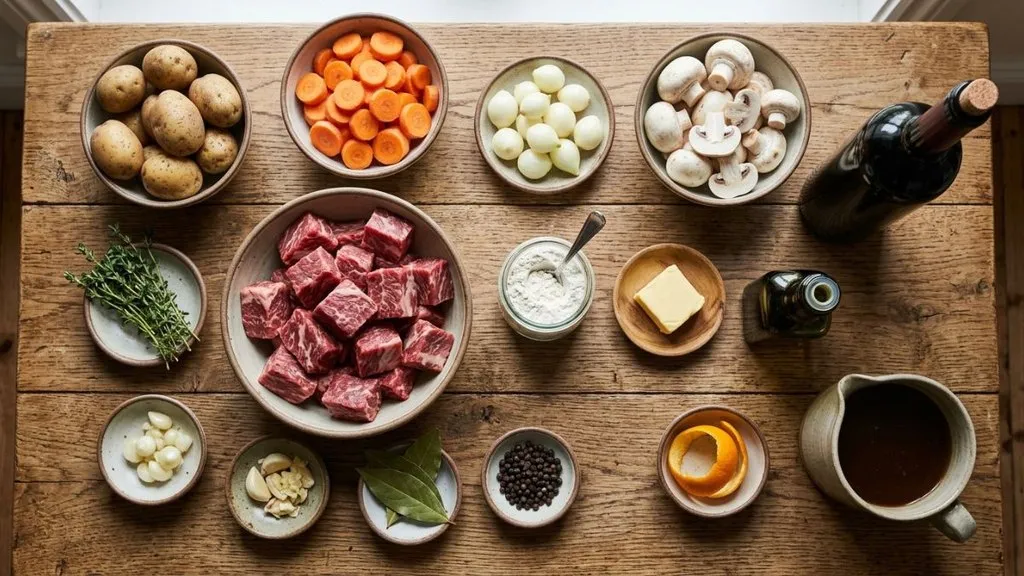
Ingredients You’ll Need
For approximately 4–6 servings, gather:
- 2–3 pounds beef chuck shoulder roast, cut into roughly 2-inch pieces
- ¼ cup extra-virgin olive oil
- 3 tablespoons butter
- About 2 cups all-purpose flour, for dredging
- Salt and freshly ground black pepper
- 8 fresh thyme sprigs
- 6 garlic cloves, smashed
- 3 strips orange zest
- ¼ teaspoon ground cloves
- 2 bay leaves
- 2½ cups beef stock
- 9 small new potatoes, halved
- ½ pound carrots, sliced
- 2 cups pearl onions
- 1 pound white mushrooms, halved
- ½ pound fresh or frozen peas
- Chopped flat-leaf parsley
This stew is hearty enough to serve as the center piece of a complete dinner. If you’re looking for another comforting dinner idea, check out our Heavenly Hash Cake.
How to Make Tyler Florence Beef Stew
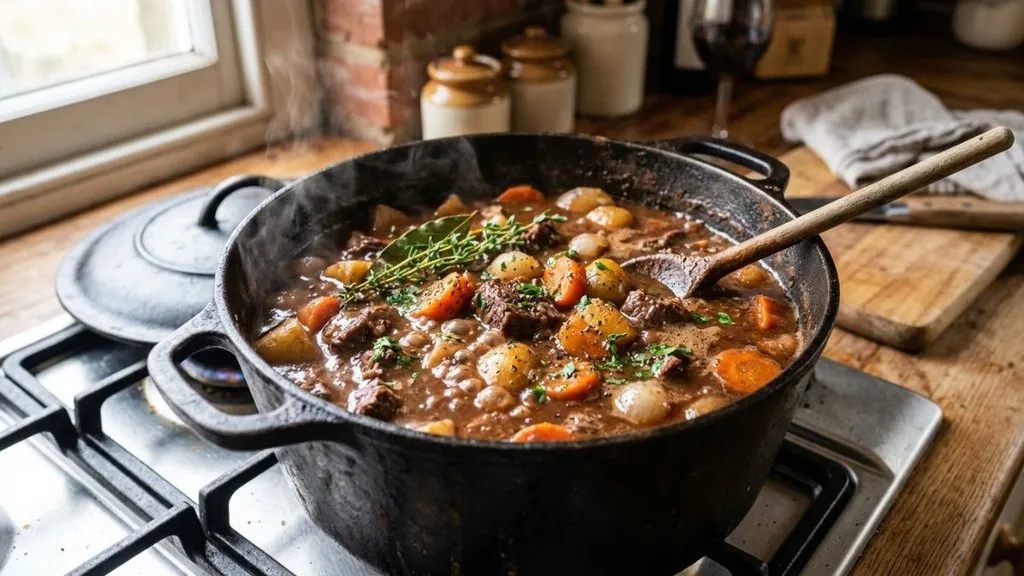
1. Brown the Beef Properly
Heat the olive oil and butter in a large Dutch oven or heavy-bottomed pot over medium-high heat.
Season the beef with salt and freshly ground black pepper. Lightly coat it with flour and shake off the excess.
Brown the beef in batches rather than filling the entire pot at once. Each piece should develop a deep golden-brown exterior before being removed.
Avoid overcrowding the pot. If too much beef is added at once, it can release moisture and steam instead of developing a flavorful crust.
2. Build the Cooking Liquid
After removing the browned beef, add the beef stock to the pot and scrape the browned bits from the bottom.
Return the beef to the pot and add the thyme, garlic, orange zest, ground cloves, and bay leaves.
Bring the liquid to a boil, then immediately reduce the heat to maintain a gentle simmer.
Cover the pot and continue cooking slowly.
3. Slowly Cook the Beef
Allow the beef to simmer gently for about two hours.
The goal is a quiet simmer rather than vigorous bubbling. Gentle heat gives the connective tissue enough time to break down and produces tender, flavorful beef.
Avoid trying to speed up the process with excessively high heat.
4. Add the Vegetables
After approximately two hours, add the potatoes, carrots, pearl onions, and mushrooms.
Continue cooking uncovered for roughly 30 minutes, or until the beef and vegetables are tender.
Add the peas toward the end of cooking so they retain their bright color and fresh flavor.
5. Check for Doneness and Season
The beef is ready when a fork can easily penetrate the meat.
Remove the thyme stems and bay leaves.
Taste the stew and adjust the salt and black pepper as needed.
Finish with freshly chopped parsley before serving.
Expert Tips for Better Results
Brown the Beef in Batches
Good browning creates much more flavor than steaming the meat. Give each piece enough space to develop a deep brown crust.
Dry the Beef First
Pat the beef dry with paper towels before seasoning and dredging. Removing excess moisture helps the meat brown properly.
Choose Beef Chuck
Chuck roast contains connective tissue that becomes tender during slow cooking, making it ideal for beef stew.
Keep the Simmer Gentle
A hard boil can make the cooking process less controlled. Low, steady heat is better for producing tender beef.
Add Vegetables at the Right Time
Potatoes, mushrooms, carrots, and peas do not need the same amount of cooking time as beef chuck. Adding them later helps preserve their texture.
Let the Stew Rest
Allow the finished stew to rest for 10–15 minutes before serving. This gives the sauce time to settle and allows the flavors to come together.
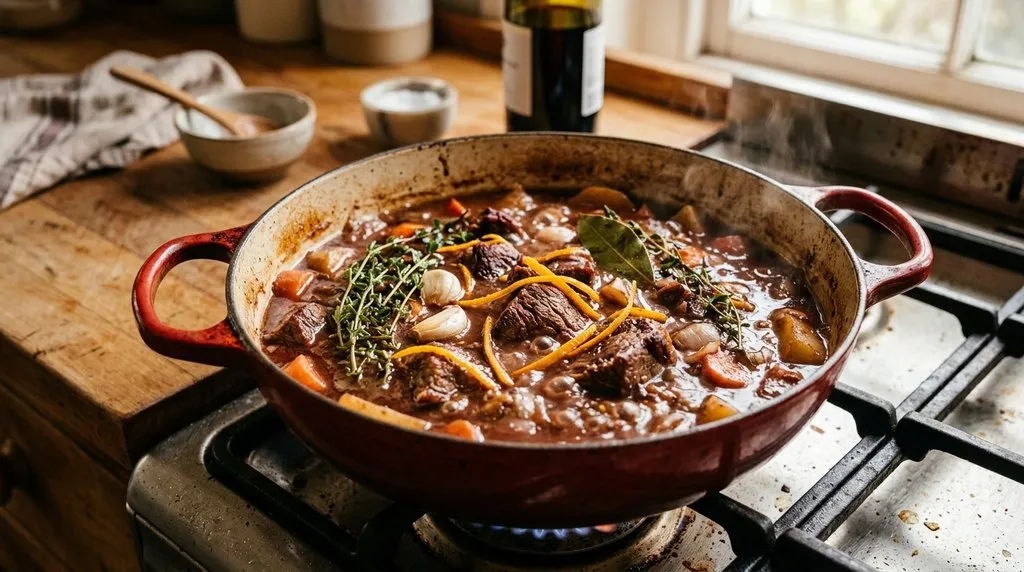
Common Mistakes to Avoid
Cooking the Beef Too Quickly
Beef chuck needs time for its connective tissue to break down. If the meat remains tough, continue cooking gently rather than immediately increasing the heat.
Skipping the Browning Step
Browning the beef is one of the most important steps. The browned bits left at the bottom of the pot add concentrated savory flavor to the cooking liquid.
Adding Every Vegetable at the Beginning
Different vegetables require different cooking times. Adding them all at the start can leave you with vegetables that are too soft.
Using Unverified Meat or Stock
The beef and beef stock should come from sources that meet Islamic dietary requirements. This is particularly important with processed stock and packaged meat products.
What to Serve With the Stew
This stew is hearty enough to serve as the centerpiece of a complete dinner.
Good accompaniments include:
- Crusty bread
- Creamy mashed potatoes
- Steamed rice
- A simple green salad
- Roasted vegetables
Crusty bread is especially good for soaking up the rich sauce.
How to Store Leftovers
Allow the stew to cool appropriately before transferring it to an airtight container.
Store it in the refrigerator and use it within approximately 3–4 days.
Reheat gently on the stovetop. If the sauce becomes too thick, add a small amount of water or beef stock. For reference, you can also see Tyler Florence’s original beef stew recipe
on Food Network.
Frequently Asked Questions
What is the best beef cut for this stew?
Beef chuck is an excellent choice because its connective tissue gradually becomes tender during long, slow cooking.
Why is my beef still tough?
Tough beef usually needs more cooking time rather than higher heat. Continue cooking it gently until a fork can easily penetrate the meat.
Can I make the stew ahead of time?
Yes. Beef stew can be prepared ahead of time and refrigerated. Reheat it gently on the stovetop before serving.
Can I freeze the stew?
Yes. Allow the stew to cool properly, transfer it to an airtight freezer-safe container, and freeze it. Thaw it safely in the refrigerator before reheating.
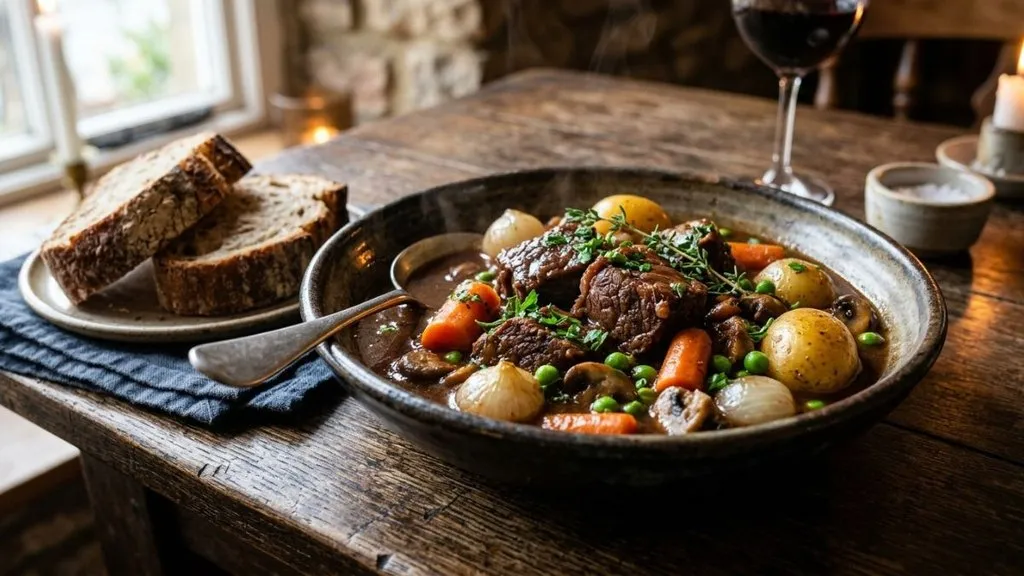
Conclusion
Tyler Florence beef stew is a comforting American-style meal built around tender beef chuck, hearty vegetables, fresh herbs, garlic, orange zest, and carefully balanced spices.
The most important techniques are simple: brown the beef well, cook it gently for enough time, and add the vegetables according to their cooking times.
Serve it with crusty bread, mashed potatoes, rice, or a fresh green salad for a satisfying family dinner.
If you enjoy classic comfort food with thoughtful layers of flavor, this beef stew is a delicious addition to your dinner rotation.
Pingback: White Chicken Chili the Neelys: Easy Rotisserie Chicken Recipe