Beef stew meat offers a rich profile of essential nutrients, providing approximately 162 calories, 27.5 grams of high-quality protein, and 5.8 grams of total fat per 3-ounce (85-gram) serving. Highly valued for slow-cooked dishes, it is an abundant source of key micronutrients including heme iron, zinc, vitamin B12, and selenium.
Whether you are crafting a traditional hearty stew or systematically tracking your daily macronutrient targets, understanding the detailed nutrition profile of beef stew meat allows for more informed meal planning and dietary integration.
Slow cooking helps break down connective tissue in tougher beef cuts, making them tender and flavorful. If you want to try a classic preparation, explore our Florence Beef Stew recipe for more ideas on cooking beef with vegetables and savory broth.
Easy Homemade Beef Stew Recipe and Ingredients
Beef stew is a comforting meal made with tender beef, vegetables, and a flavorful broth. Slow cooking allows the beef to become soft while the vegetables absorb the rich flavors of the broth. It is also an easy way to combine protein with vegetables in one satisfying dish.
Ingredients for Homemade Beef Stew
- 1½ pounds beef stew meat, cut into bite-sized pieces
- 2 tablespoons olive oil
- 1 medium onion, chopped
- 3 carrots, peeled and sliced
- 2 celery stalks, chopped
- 3 medium potatoes, peeled and cubed
- 3 cloves garlic, minced
- 3 cups low-sodium beef broth
- 2 tablespoons tomato paste
- 1 tablespoon flour
- 1 teaspoon dried thyme
- 1 bay leaf
- Salt and black pepper to taste
How to Make Beef Stew
- Brown the beef: Heat olive oil in a large pot over medium-high heat. Add the beef pieces and brown them on all sides.
- Cook the aromatics: Add chopped onion and garlic. Cook for a few minutes until softened.
- Add the broth: Stir in tomato paste, flour, thyme, and black pepper. Pour in the beef broth and add the bay leaf.
- Add vegetables: Mix in carrots, celery, and potatoes.
- Simmer slowly: Cover the pot and cook over low heat for approximately 1½ to 2 hours, or until the beef becomes tender and the vegetables are cooked.
- Adjust seasoning: Remove the bay leaf, taste the stew, and add salt or pepper as needed.
Serve warm and enjoy a hearty homemade beef stew.
For another version of this comforting dish, you can also explore this homemade beef stew recipe for additional cooking inspiration.
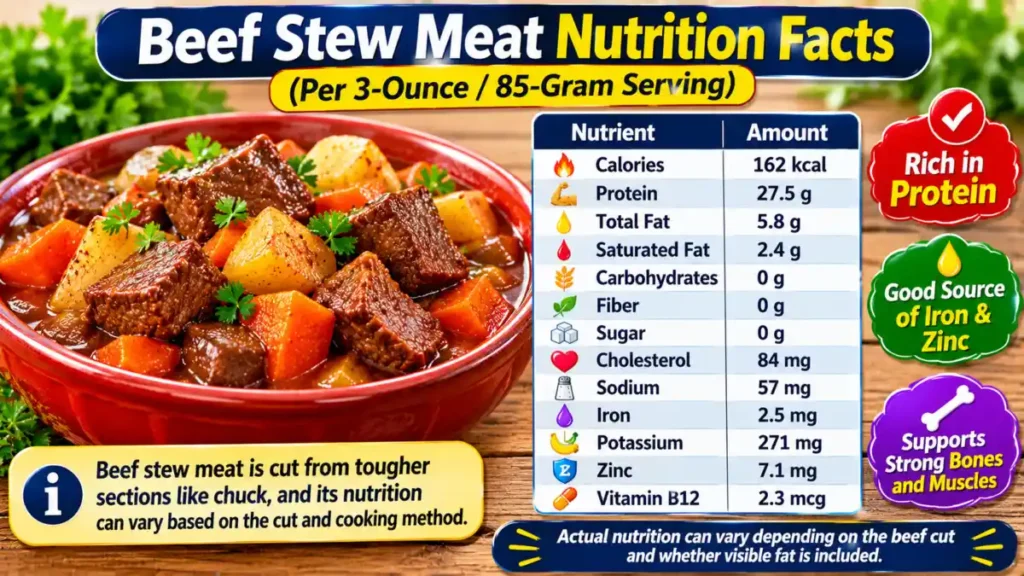
Beef Stew Meat Nutrition Facts
Beef stew meat is predominantly harvested from well-exercised, connective-tissue-rich muscle groups such as the chuck, round, or brisket. These cuts benefit significantly from low-and-slow moist-heat cooking methods (like braising or simmering), which hydrolyze tough collagen into tender gelatin. The precise nutritional breakdown depends on the specific primal cut, trimming thoroughness, and cooking preparation.
The table below details the macronutrient and micronutrient composition of a standard 3-ounce (85-gram) cooked serving of trimmed beef stew meat:
| Nutrient | Amount per 3 oz (85g) |
| Calories | 162 kcal |
| Protein | 27.5 g |
| Total Fat | 5.8 g |
| Saturated Fat | 2.4 g |
| Carbohydrates | 0 g |
| Dietary Fiber | 0 g |
| Sugars | 0 g |
| Cholesterol | 84 mg |
| Sodium | 57 mg |
| Iron (Heme) | 2.5 mg |
| Zinc | 7.1 mg |
| Vitamin B12 | 2.3 mcg |
| Potassium | 271 mg |
Note: Values are estimated based on standard nutrient database entries for cooked, trimmed beef stew meat. Nutritional density will fluctuate depending on the precise anatomical cut used and the degree of fat trimming prior to cooking.
How Many Calories Are in Beef Stew Meat?
A standard 3-ounce (85-gram) serving of cooked beef stew meat contains approximately 162 calories, translating to roughly 191 calories per 100 grams. Because beef is virtually carb-free, nearly all of these calories derive directly from protein and fat.
The calorie count can change depending on how much fat the meat contains and how it is prepared.
For instance, choosing lean chuck shoulder cuts yields fewer fat-derived calories compared to well-marbled point cuts. Additionally, cooking additives such as searing oils, butter, rich stocks, or flour-based roux thickeners will significantly increase the total caloric load of the final dish.
For precise caloric tracking, weigh raw meat portions before cooking and account separately for any fats or starches introduced during the braising process.
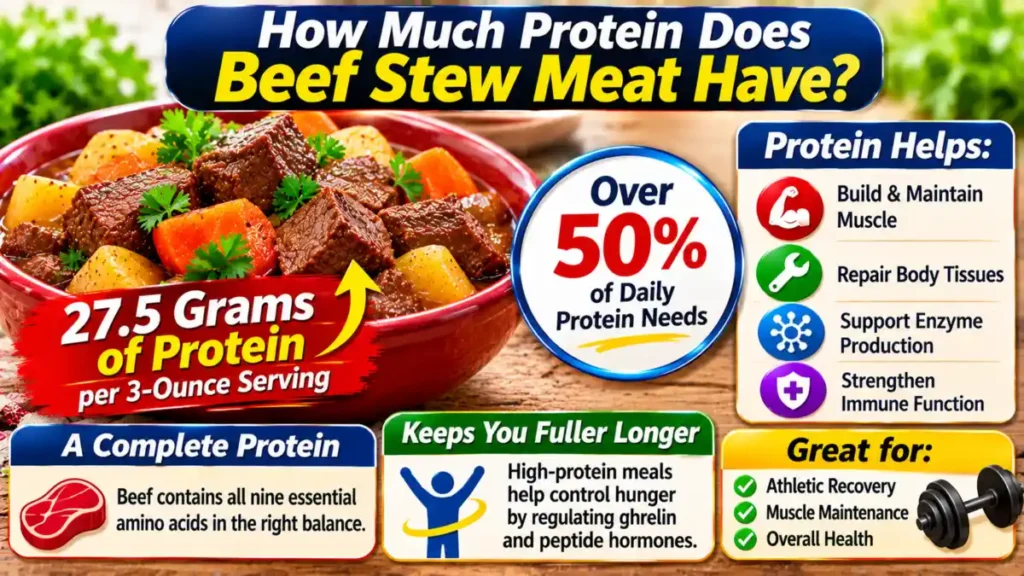
How Much Protein Does Beef Stew Meat Have?
Beef stew meat is an exceptionally dense source of bioavailable protein, yielding approximately 27.5 grams per 3-ounce serving. This accounts for over 50% of the daily recommended intake for average adults in a single compact serving.
Dietary protein supplies the amino acid building blocks essential for skeletal muscle synthesis, tissue repair, enzyme production, and immune antibody formation. High-protein meals also promote satiety by regulating hunger hormones like ghrelin and peptide.
As a complete protein, beef contains all nine essential amino acids in optimal ratios for human physiology, making stew meat an effective nutritional foundation for athletic recovery and muscle mass maintenance.
Fat and Carbohydrates in Beef Stew Meat
In its unseasoned, natural state, beef stew meat contains 0 grams of carbohydrates, fiber, or sugars. This makes it intrinsically compatible with ketogenic, low-carb, and carnivore dietary frameworks.
Fat content varies by cut, but a typical trimmed 3-ounce serving contains about 5.8 grams of total fat. Of this total, approximately 2.4 grams consist of saturated fat, with the remainder composed of heart-healthy monounsaturated and polyunsaturated fatty acids.
However, not every package has the same fat content. Some stew meat contains more visible fat, while leaner varieties have less.
Trimming excess visible fat before cooking can help reduce the overall fat content of your meal.
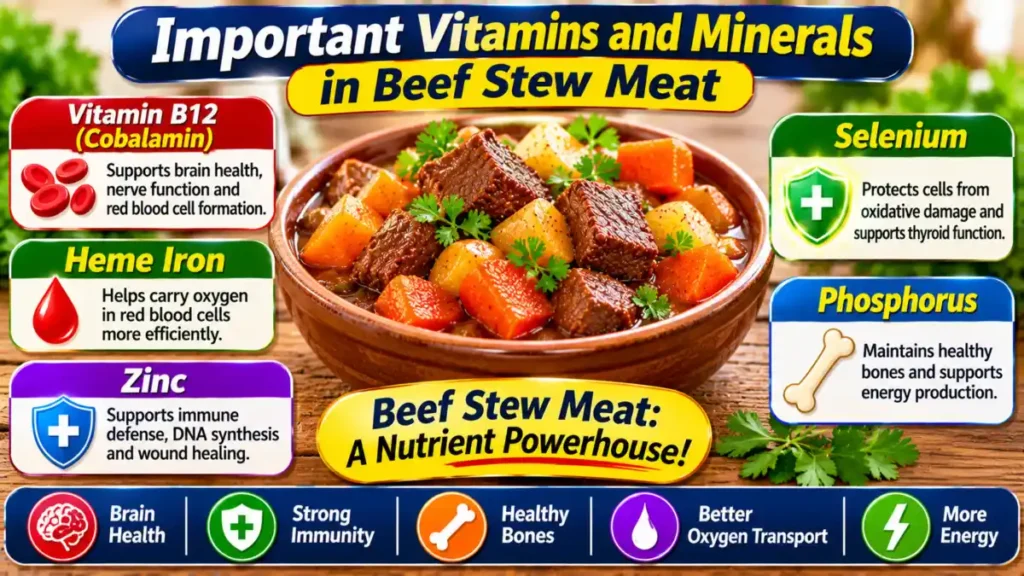
Important Vitamins and Minerals in Beef Stew Meat
Beyond macronutrients, beef stew meat delivers a concentrated spectrum of bioavailable minerals and B-complex vitamins essential for metabolic efficiency:
Vitamin B12 (Cobalamin): Essential for neurological function, brain health, and red blood cell formation, B12 is abundant in red meat cuts.
Heme Iron: Beef provides heme iron, which is absorbed far more efficiently by the human digestive system than plant-derived non-heme iron, directly supporting oxygen transport via red blood cell hemoglobin.
Zinc: Delivering over 60% of the daily value per serving, the zinc in beef plays a vital role in immune defense, cellular division, DNA synthesis, and wound healing.
Selenium: This mineral helps protect cells from oxidative damage and supports normal thyroid function.
Phosphorus: Beef contains phosphorus, which helps maintain healthy bones and supports energy production.
These nutrients make beef stew meat more than just a source of protein.
Is Beef Stew Meat Healthy?
Beef stew meat can be part of a healthy, balanced diet when eaten in appropriate portions.
It provides protein, iron, zinc, and vitamin B12 without adding carbohydrates. Choosing leaner cuts and combining beef with vegetables can improve the overall nutritional balance of your meal.
While highly nutrient-dense, red meat intake should be contextualized within an individual’s overall dietary goals, cardiovascular risk factors, and saturated fat allowances.
Pairing moderate servings of lean beef stew meat with fiber-rich root vegetables, legumes, and green leafy vegetables creates a well-rounded meal optimized for nutrient absorption and digestive health. Beef chuck is commonly used for slow-cooked meals because its connective tissue becomes tender with time. You can also learn how to prepare this cut in our Bone-In Chuck Roast Recipe, which explains the basics of slow braising.
Does Cooking Change Beef Stew Meat Nutrition?
Yes, thermal processing alters both moisture content and macronutrient concentration per unit weight.
As beef cooks, it loses water volume and renders out a portion of intra-muscular fat. Consequently, cooked beef stew meat becomes more nutrient-dense per gram than raw meat, yielding higher protein and calorie concentrations per 100g serving.
Slow cooking, braising, and simmering are popular methods because they help break down connective tissue and make tougher beef cuts tender.
Furthermore, slow cooking allows fat-soluble vitamins and minerals to leach into the cooking liquid. Consuming the stew broth ensures you capture all nutrients released during the simmering process.
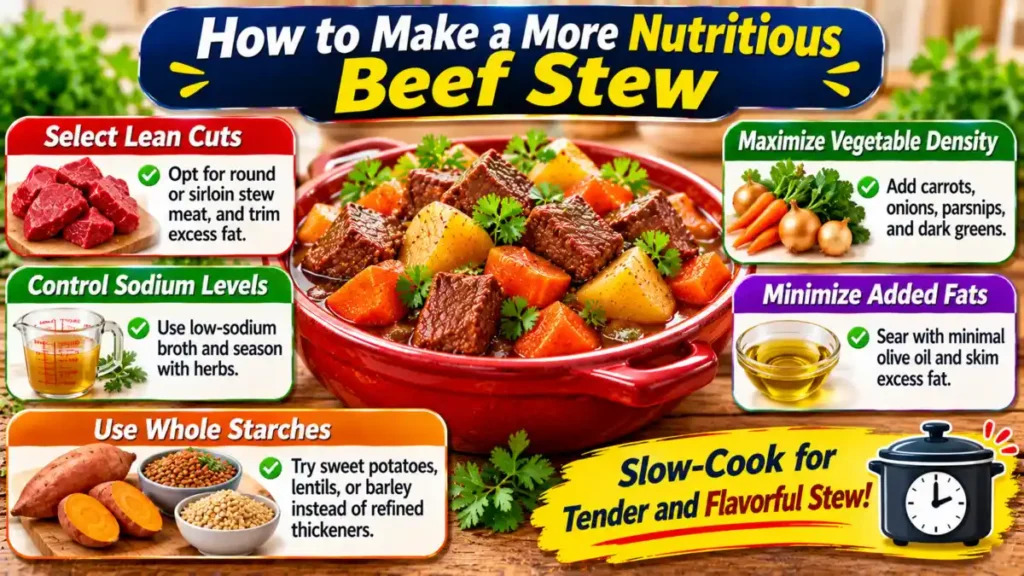
How to Make a More Nutritious Beef Stew
Optimizing the nutritional value of your home-cooked stew can be achieved with a few deliberate culinary adjustments:
- Select Lean Cuts: Opt for round or sirloin stew meat, and trim exterior fat caps prior to searing.
- Maximize Vegetable Density: Incorporate colorful vegetables like carrots, onions, parsnips, and dark greens for dietary fiber and antioxidants.
- Control Sodium Levels: Use low-sodium or unsalted bone broths, seasoning primarily with herbs like thyme, rosemary, and bay leaves.
- Minimize Added Fats: Sear meat in minimal olive oil and skim off rendered surface fat after chilling the cooked stew.
- Use Whole Starches: Swap refined thickeners for nutrient-dense starches like sweet potatoes, lentils, or barley.
Slow-cooking the ingredients allows the beef to become tender while developing a rich flavor.
Frequently Asked Questions
How many calories are in 100 grams of beef stew meat?
A 100-gram serving contains approximately 191 calories based on one generic beef stew meat nutrition entry. The exact amount depends on the cut and fat content.
Is beef stew meat high in protein?
Yes. A 3-ounce serving provides approximately 27.5 grams of protein, making it a protein-rich food.
Does beef stew meat contain carbohydrates?
Plain beef stew meat contains zero carbohydrates, sugar, and fiber. However, vegetables, flour, and other ingredients added to a stew contribute carbohydrates.
Is beef stew meat good for weight management?
It can fit into a weight-conscious eating plan because it provides substantial protein. Choosing lean cuts, controlling portions, and limiting high-calorie additions can help manage total calorie intake.
Is beef stew meat healthier than ground beef?
It depends on the cut and fat percentage. Lean beef stew meat can provide plenty of protein with moderate fat, but lean ground beef can offer similar nutritional benefits. Comparing nutrition labels is the best way to decide.
Final Thoughts
Beef stew meat is a nutrient-rich food that provides protein, iron, zinc, vitamin B12, and other essential nutrients. A typical 3-ounce serving contains approximately 162 calories and 27.5 grams of protein, although the exact values depend on the cut and preparation method.
For a balanced meal, choose lean beef, add plenty of vegetables, and pay attention to portion sizes. With these simple choices, beef stew meat can be a satisfying part of a varied and nutritious diet.