Beef prices have become a bigger concern for American shoppers, and now some of the country’s largest grocery retailers are facing questions from the U.S. Department of Justice.
The latest Publix, Costco and Aldi beef probe is part of a broader investigation into why beef has become so expensive. The Justice Department has expanded its scrutiny beyond major meatpackers and is now examining the retail side of the beef supply chain.
For shoppers who have noticed higher prices at the meat counter, the investigation raises a simple question: Why does beef cost so much right now?
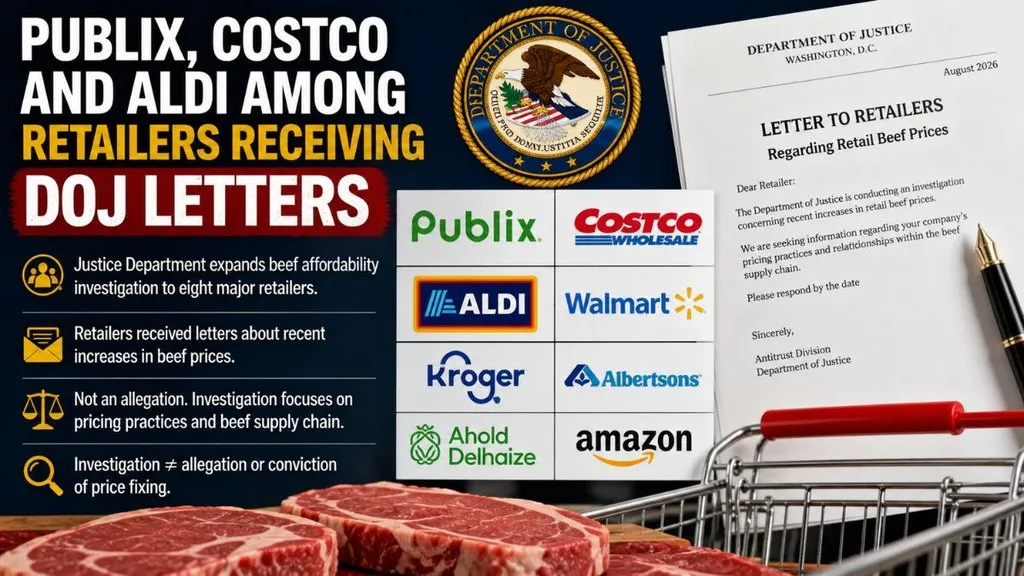
Publix, Costco and Aldi among retailers receiving DOJ letters
The Justice Department has expanded its beef affordability investigation to include eight major retailers. The companies named include Publix, Costco, Aldi, Walmart, Kroger, Albertsons, Ahold Delhaize and Amazon.
According to reports, letters were sent to the retailers concerning recent increases in retail beef prices.
The move does not mean the retailers have been found to have broken the law. Instead, the investigation is focused on gathering information about pricing practices and the way beef moves through the market.
This is a distinction to point out. Engaging in an investigation is not the same as an allegation or conviction of price fixing.
Why is the DOJ looking at beef prices?
Beef prices have been under pressure from several directions.
The Justice Department previously started an investigation into the nation’s top meatpackers, such as JBS, Cargill, Tyson Foods and National Beef. These businesses are responsible for a big share of the handling of beef prior to it being sold in supermarkets.
Now, investigators are looking further down the supply chain.
The retail investigation could help officials understand how wholesale beef costs translate into the prices consumers see on store shelves. Investigators are reportedly seeking information about pricing strategies, costs, margins and relationships between retailers and meat suppliers.
In other words, the government wants a clearer picture of where the money goes between cattle producers, meat processors, retailers and shoppers.
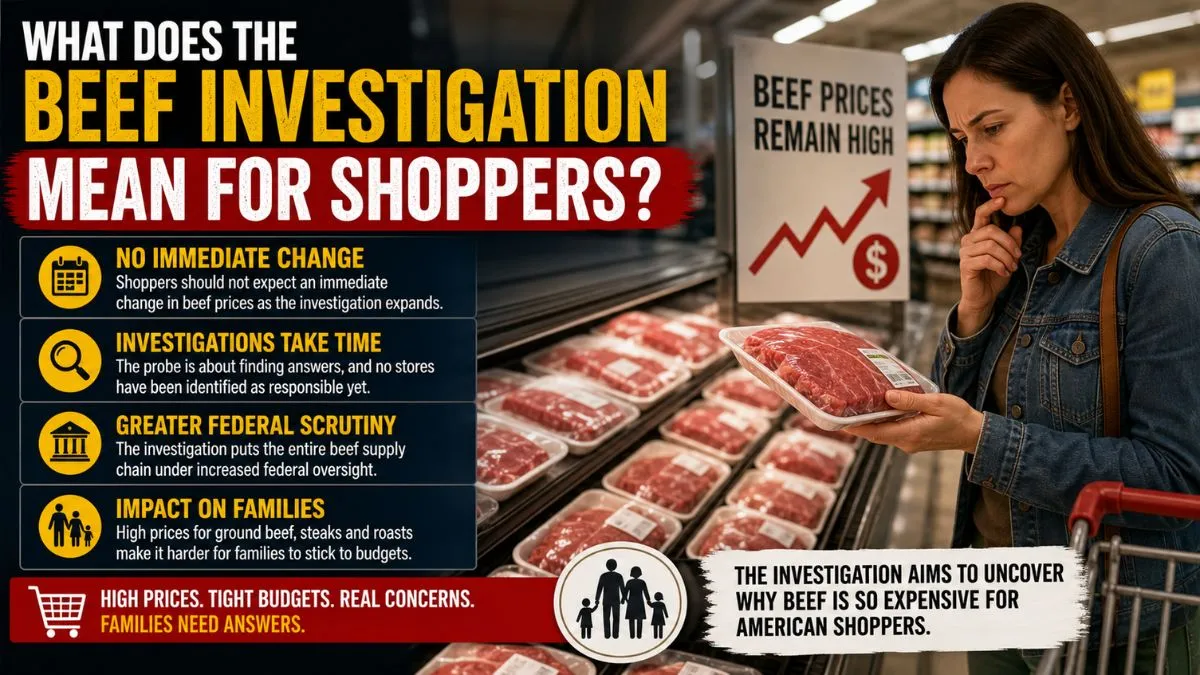
What does the beef investigation mean for shoppers?
For now, shoppers should not expect an immediate change in beef prices simply because the investigation has expanded.
The probe is all about learning to find answers, and investigations can take time. No word yet, either, that the other stores—such as Publix, Costco, Aldi—have been identified as responsible for the price increases on beef.
Still, the investigation is significant because it puts the entire beef supply chain under greater federal scrutiny.
For families already adjusting their grocery budgets, the issue is especially noticeable. Ground beef, steaks, roasts and other popular cuts have become increasingly expensive, making it harder for shoppers to put beef on the table without spending more.
Why beef prices are so high
The investigation comes as the U.S. cattle supply remains tight.
A smaller cattle herd can put pressure on the supply of beef available to consumers. At the same time, costs associated with raising cattle, processing meat, transportation and retail operations can all influence the final price.
That makes beef pricing complicated. There is rarely one factor responsible for what a shopper pays at the checkout.
What happens next?
The Justice Department will continue collecting information from the retailers and other participants in the beef industry.
The investigation could eventually lead to further action if officials uncover evidence of illegal conduct. But at this stage, the important development is that federal investigators are examining pricing at both the processing and retail levels.
For shoppers, that means beef prices are likely to remain a closely watched issue.
Until investigators reach conclusions, consumers will have to continue navigating higher meat prices while waiting to see whether the federal probe uncovers a larger problem in the beef market.
The Publix Costco Aldi beef probe is ultimately about more than three grocery chains. It is part of a much wider examination of how beef is priced from the ranch all the way to the grocery-store meat counter—and whether American consumers are paying more than they should.