A beef recall is prompting shoppers in Texas and Florida to take another look inside their refrigerators and freezers.
Nearly 30,000 pounds of raw beef imported from Argentina has been recalled after federal officials discovered that the products entered the United States without undergoing a required USDA import reinspection. The recall involves beef distributed to retailers and distributors in Texas and Florida.
The affected meat was imported by Corte Argentino USA LLC, a company based in Aventura, Florida. The U.S. Department of Agriculture’s Food Safety and Inspection Service, or FSIS, said approximately 29,628 pounds of raw beef are included in the recall.
For consumers, the biggest question is simple: Do I have any of this beef at home?
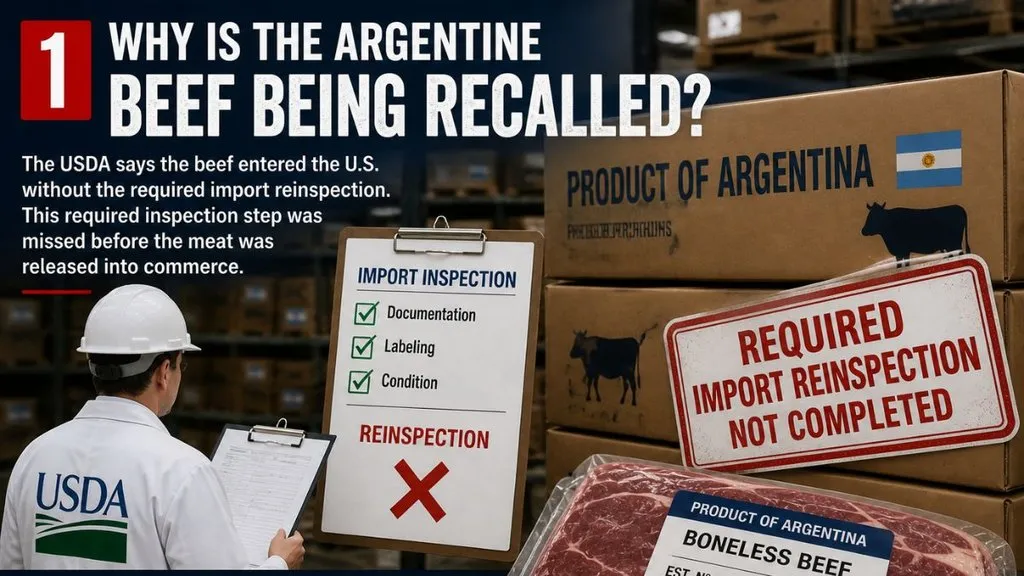
Why is the Argentine beef being recalled?
The recall was not announced because officials confirmed that the meat was contaminated.
Instead, the problem involves a required inspection step. According to the USDA, the Argentine beef entered U.S. commerce without the benefit of the required import reinspection. The issue was discovered during routine FSIS inspection activities.
Imported meat goes through a federal verification process before it can be distributed in the United States. During reinspection, officials can review documentation, labeling and the condition of the product.
Because this shipment did not complete that required process, the USDA moved to have the affected beef removed from the market.
That may sound like a technical or paperwork issue, but it is an important part of the federal food-safety system. Consumers generally expect imported meat sold in American stores to have passed the required inspection checkpoints. For more food news and new product updates, check out our latest story on Little Debbie’s New Chocolate Collaboration, where classic favorites get a gourmet twist.
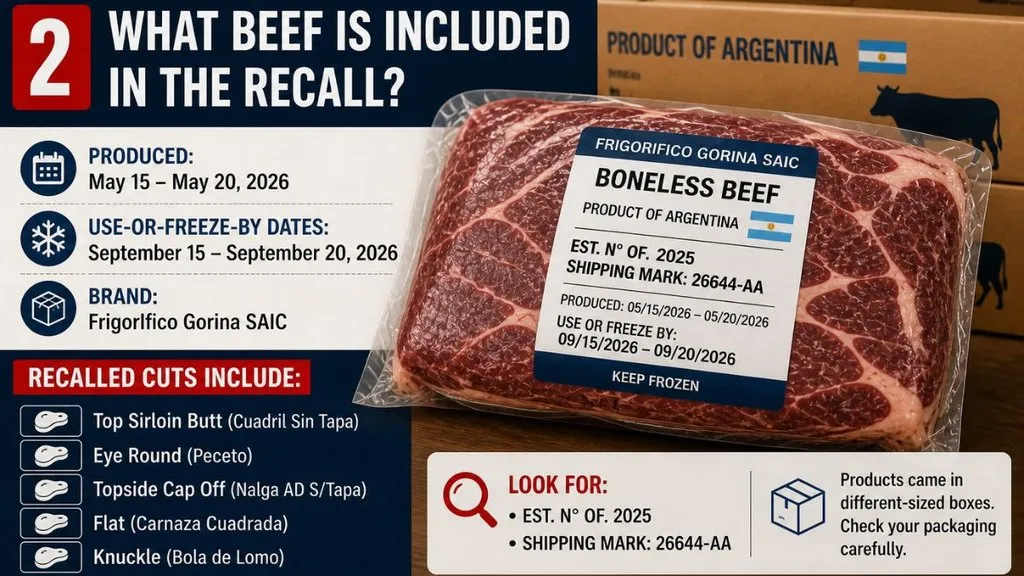
What beef is included in the recall?
The recalled products were produced between May 15 and May 20, 2026, and have use-or-freeze-by dates ranging from September 15 through September 20, 2026.
The affected products are boneless beef sold in cardboard boxes under the FrigorIfico Gorina SAIC brand.
The recalled cuts include:
- Top Sirloin Butt, also labeled “Cuadril Sin Tapa”
- Eye Round, or “Peceto”
- Topside Cap Off, or “Nalga AD S/Tapa”
- Flat, or “Carnaza Cuadrada”
- Knuckle, or “Bola de Lomo”
Consumers should also look for the Argentine establishment number “EST. N° OF. 2025” and shipping mark “26644-AA” on the affected packaging.
The products came in different-sized boxes, so simply remembering how much beef was purchased may not be enough to determine whether a package is part of the recall.
Beef recall affects Texas and Florida
The recalled Argentine beef was distributed to retailers and distributors in Texas and Florida.
At this point, officials have not provided a complete public list of every store where the products may have been sold. That means shoppers should rely on the product information and identifying marks rather than assuming a particular retailer is or is not involved.
If you recently purchased Argentine beef in either state, checking the packaging is a worthwhile precaution—particularly if the meat has been frozen and you no longer remember exactly when you bought it. Learn more about Beef Recall
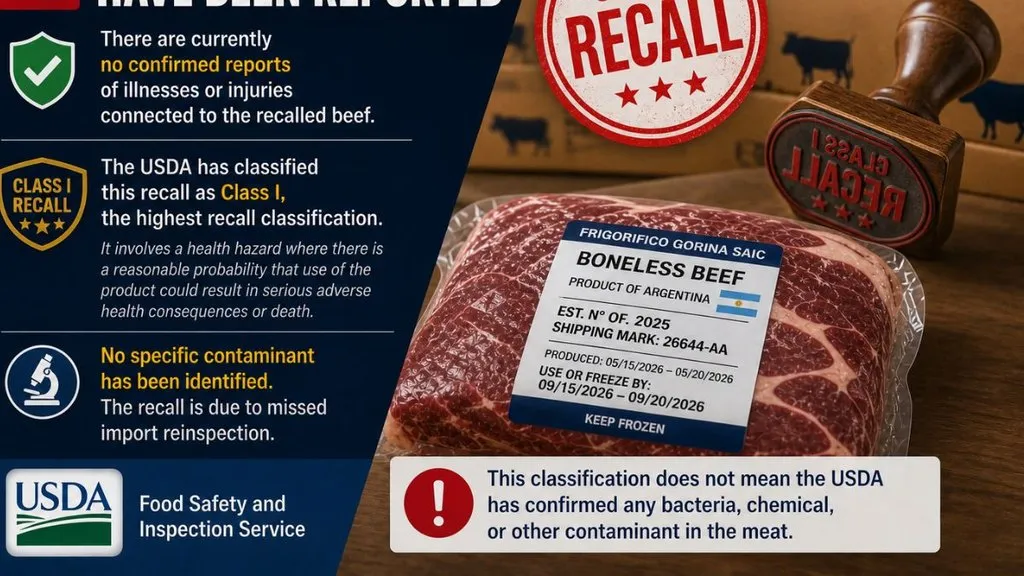
No illnesses have been reported
One important detail should not get lost in the headlines: there are currently no confirmed reports of illnesses or injuries connected to the recalled beef.
The USDA has nevertheless classified the recall as Class I, its highest recall classification. That classification means the agency considers the situation to involve a health hazard where there is a reasonable probability that use of the product could result in serious adverse health consequences or death.
The classification does not mean that a specific contaminant has been identified in this beef. The USDA recall notice points to the missed import reinspection as the reason for the recall.
That distinction is important. Consumers should take the recall seriously, but they should not assume that the USDA has confirmed a particular bacteria, chemical or other contaminant in the meat.
What should consumers do with the recalled beef?
If you find a package that matches the recall information, do not eat it.
The USDA advises consumers to throw the affected beef away or return it to the place where it was purchased.
It is also a good idea to check the freezer carefully. Because some of the affected products have dates extending into September, a package purchased weeks or months ago could still be sitting in a household freezer.
Anyone who believes they became sick after eating recalled meat should contact a healthcare provider.
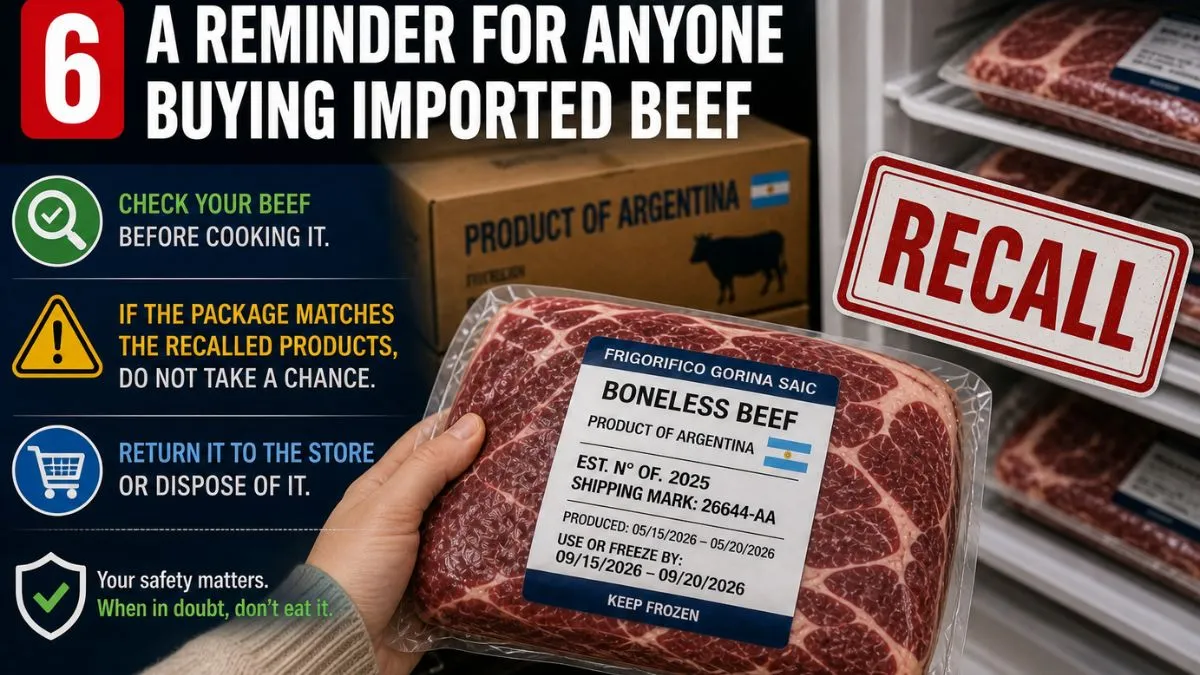
A reminder for anyone buying imported beef
This recall is a reminder that food recalls do not always begin with reports of people getting sick. Sometimes they start when inspectors discover that a required safety procedure was missed.
In this case, the USDA says the problem was identified during routine inspection activities. The agency is now working to ensure the recalled products are removed from the marketplace.
For shoppers in Texas and Florida, the practical takeaway is straightforward: check your beef before cooking it. If the package matches the recalled products, do not take a chance. Return it or dispose of it.
Pingback: Spicy Chicken McNuggets Return September 1 Fans Rejoice
Pingback: Publix, Costco and Aldi Beef Probe: What Shoppers Need to Know